Elevator rollback at start is one of the most common ride comfort and commissioning problems in modern lift systems. It usually happens in the short moment when the mechanical brake releases and the motor has not yet produced enough holding torque to support the car and counterweight balance. Passengers may feel a sudden drop, a backward movement, or a strong jerk before the elevator begins to move in the commanded direction.
For maintenance teams and elevator control cabinet manufacturers, this problem is not only about comfort. It can also indicate poor torque response, incorrect brake timing, unstable encoder feedback, unsuitable motor parameters, or weak low-speed control. If the problem is not solved correctly, the elevator may continue to show start-up slipping, leveling instability, and passenger complaints after installation or modernization.
A Closed Loop Elevator Inverter is designed to solve this issue by using encoder feedback, vector control, pre-torque compensation, and brake control logic. Unlike a basic open-loop drive, a Closed Loop Elevator Inverter can read the actual motor position and speed in real time. This allows the drive to build torque before the brake fully opens, correct small movement errors, and keep the elevator car stable at zero speed.
For gearless PMSM elevators, residential elevators, commercial elevators, villa elevators, and cargo elevators, a Closed Loop Elevator Inverter provides a practical and reliable Elevator Anti-Rollback Solution. It helps the elevator start smoothly, reduces Elevator Rollback, improves leveling performance, and creates a more comfortable ride for passengers.
Key Takeaways
Elevator Rollback happens when the brake releases before enough motor torque is established.
A Closed Loop Elevator Inverter uses encoder feedback to control torque and speed more accurately.
Pre-torque compensation is the key function that helps prevent start-up slipping.
Brake release timing, PG card signal quality, motor tuning, and load feedback all affect anti-rollback performance.
For elevators using 1313 or 1387 encoder feedback, the right Elevator Inverter can improve start smoothness, leveling accuracy, and passenger comfort.
What Is Elevator Rollback at Start?
Elevator Rollback refers to the slight reverse movement of the elevator car when the system starts from standstill. In many cases, it happens immediately after the mechanical brake opens. The elevator may move downward for a short distance before moving upward, or it may jerk upward when too much starting torque is applied. This movement can be small, but passengers can still feel it clearly.
The reason is simple: an elevator car is always affected by gravity, counterweight balance, passenger load, and rope tension. When the brake is closed, the mechanical brake holds the system. When the brake opens, the motor and inverter must instantly take over the load. If the Elevator Inverter cannot calculate and output the correct torque at that moment, Elevator Rollback may occur.
A Closed Loop Elevator Inverter solves this problem by creating a feedback loop between the motor encoder and the drive controller. The inverter does not only send a command to the motor. It also checks whether the motor is responding correctly. If the motor shaft begins to move in the wrong direction, the Closed Loop Elevator Inverter can quickly adjust torque current to hold the car stable.
This is why closed-loop control is especially important for modern gearless elevators. Permanent magnet synchronous motors require accurate rotor position information from the first millisecond of operation. Without accurate feedback, the inverter may not know the exact rotor angle, and the torque response may be delayed. With a Closed Loop Elevator Inverter, the drive can identify rotor position, calculate torque demand, and reduce rollback during start-up.
Why Elevator Rollback Happens During Start-Up
Elevator Rollback is rarely caused by one single factor. In most projects, it is the result of several control and mechanical conditions happening at the same time. A good Elevator Anti-Rollback Solution should not only increase starting torque. It should also check feedback accuracy, brake timing, load information, and the complete start sequence.
Cause | What Happens | How a Closed Loop Elevator Inverter Helps |
Insufficient starting torque | The brake opens before the motor produces enough holding force. | Applies pre-torque before movement starts. |
Incorrect brake release timing | The brake releases too early or too late, causing drop or jerk. | Coordinates torque build-up with brake control logic. |
Poor encoder feedback | The inverter receives delayed, noisy, or incorrect rotor position data. | Uses PG card feedback to correct torque and speed response. |
Load imbalance | The car load and counterweight are not balanced at start. | Uses load cell signal or current estimation to adjust torque. |
Improper motor tuning | The inverter does not match the motor parameters correctly. | Improves vector control accuracy after proper auto-tuning. |
Unstable low-speed control | The elevator shakes, slips, or vibrates near zero speed. | Maintains zero-speed holding torque and smoother S-ramp control. |
The most important point is that Elevator Rollback is not only a mechanical brake problem. The brake holds the system at standstill, but the Elevator Inverter must take over the load smoothly once the brake opens. A Closed Loop Elevator Inverter is valuable because it can manage this transition with more precise torque control.
In many modernization projects, technicians may first suspect the brake, guide rail, rope tension, or controller signal. These areas should be checked, but the drive control logic is often the key factor. If the Elevator Inverter cannot provide enough torque at zero speed, even a properly working mechanical brake cannot prevent start-up rollback after the brake releases.
How a Closed Loop Elevator Inverter Prevents Elevator Rollback
A Closed Loop Elevator Inverter works by combining the inverter output, motor response, and encoder signal into one control loop. In an open-loop system, the inverter estimates motor speed and torque based mainly on output voltage, current, and motor model. This can work for general applications, but elevators require much more precise low-speed control.
In a closed-loop system, the encoder sends actual motor position and speed feedback to the inverter through a PG card. The Closed Loop Elevator Inverter compares the commanded movement with the real motor movement. If there is an error, the inverter corrects the torque current immediately. This is especially useful at zero speed and very low speed, where Elevator Rollback usually begins.
The anti-rollback process can be understood in five steps:
The elevator controller sends a start command to the Elevator Inverter.
The Closed Loop Elevator Inverter reads the encoder position and confirms the motor state.
The inverter calculates the required holding torque before the brake opens.
The brake control sequence releases the mechanical brake only after torque is ready.
The inverter starts the speed curve smoothly and corrects any movement deviation in real time.
This process is the foundation of an effective Elevator Anti-Rollback Solution. Instead of waiting for the car to slip and then correcting it, the Closed Loop Elevator Inverter prepares torque in advance. This makes the start feel stable, controlled, and comfortable.
In elevator traction control, the drive must respond before passengers feel any movement. A Closed Loop Elevator Inverter can use PG card feedback to support asynchronous AC induction motors and permanent magnet synchronous motors, while working with encoder options such as AB, ABZ, EnDat 1313, and Sin/Cos 1387. This makes the control loop more responsive during brake release and low-speed start-up.
Pre-Torque Compensation: The Core of an Elevator Anti-Rollback Solution
Pre-torque compensation is one of the most important functions of a Closed Loop Elevator Inverter. It means the inverter applies a calculated amount of torque before the mechanical brake fully releases. The purpose is to let the motor support the load at the exact moment the brake stops holding the system.
Without pre-torque, the elevator may briefly lose support during the transfer from brake holding to motor holding. If the car is heavier than the counterweight side, it may move downward. If the counterweight side is heavier, the car may move upward. Both cases are forms of Elevator Rollback or start-up jerk.
A Closed Loop Elevator Inverter can calculate pre-torque in different ways. In a system with a load cell, the inverter can receive an analog load signal and estimate the required torque. In a system without a load cell, the inverter may use motor current, magnetic feedback, encoder position, and internal control logic to estimate the needed holding torque.
Pre-Torque Method | Best Application | Benefit | Key Requirement |
Load cell pre-torque | Geared elevators or systems with weight sensors | Calculates torque based on actual car load | Stable analog load signal |
Encoder-based pre-torque | Gearless PMSM elevators | Uses rotor position feedback for fast torque response | Correct PG card and encoder alignment |
Current estimation pre-torque | Retrofit projects without load sensors | Reduces rollback without major system changes | Accurate motor tuning |
Brake sequence optimization | All elevator drive systems | Coordinates torque output and brake release timing | Correct brake delay and release parameters |
A high-quality Closed Loop Elevator Inverter should not treat pre-torque as a simple fixed value. Different elevator loads require different starting torque. A full car, empty car, upward run, downward run, geared motor, and gearless PMSM motor may all need different torque behavior. This is why closed-loop vector control is essential for a reliable Elevator Anti-Rollback Solution.
Pre-torque should also be adjusted carefully. If the torque is too low, Elevator Rollback may continue. If the torque is too high, the elevator may jerk in the opposite direction. The correct setting should hold the car steadily at the moment of brake release and then allow the speed curve to begin smoothly.
Why Encoder Feedback Matters: 1313 and 1387 PG Card Options
Encoder feedback is the difference between guessing and knowing. In elevator applications, the inverter must know the real motor shaft position, especially at start. A Closed Loop Elevator Inverter receives this feedback through a PG card. The PG card translates encoder signals into data that the inverter can use for vector control.
The 1387 and 1313 PG card options are both used in elevator drive systems, but they have different signal characteristics. The 1387 Sin/Cos encoder signal is widely used in gearless elevator motors and can provide smooth low-speed performance when the signal quality is good. The 1313 EnDat encoder provides digital absolute position feedback, which is useful for fast rotor position recognition and strong noise immunity.
PG Card / Encoder Type | Signal Type | Strength | Anti-Rollback Consideration |
1387 Sin/Cos PG card | Analog sine/cosine feedback | Very smooth low-speed control and wide motor compatibility | Needs clean signal, good shielding, and strong filtering |
1313 EnDat PG card | Digital absolute feedback | Fast position recognition and stronger noise resistance | Often preferred for high-precision PMSM elevator control |
AB / ABZ PG card | Incremental pulse feedback | Common for many induction motor systems | Suitable when motor and controller requirements match |
For anti-rollback control, feedback quality is critical. If the encoder cable is poorly shielded, if the PG card is not matched to the encoder type, or if the motor direction is set incorrectly, the Closed Loop Elevator Inverter may receive wrong feedback. This can lead to vibration, rollback, speed deviation, or fault trips.
Therefore, when choosing a Closed Loop Elevator Inverter, buyers should not only check the power rating. They should also confirm the motor type, encoder type, PG card compatibility, voltage class, control mode, brake control requirement, and rescue operation requirement. These factors help determine which Elevator Inverter is suitable for the elevator’s traction system, load condition, and ride comfort requirements.
Brake Control Timing: The Hidden Factor Behind Elevator Rollback
Many technicians focus only on torque gain when solving Elevator Rollback. However, brake timing is just as important. Even if the Closed Loop Elevator Inverter can produce enough torque, the start may still feel uncomfortable if the brake opens too early, too late, or too suddenly.
The start sequence should follow a clear order. First, the Elevator Inverter receives the run command. Second, the Closed Loop Elevator Inverter prepares magnetizing current and torque current. Third, the inverter builds pre-torque according to load and direction. Fourth, the brake releases. Fifth, the speed curve begins. If this sequence is wrong, Elevator Rollback can still occur.
A practical commissioning checklist should include:
Confirm that the motor parameters are correctly entered.
Run motor auto-tuning according to the inverter manual.
Check encoder direction and PG card signal status.
Set the brake release delay after torque is established.
Adjust pre-torque gain gradually instead of using extreme values.
Test empty car, half-load, and full-load conditions.
Check whether rollback changes between upward and downward travel.
Record current, torque command, speed feedback, and brake output timing.
A Closed Loop Elevator Inverter with integrated brake control can make this process easier because the brake output and motor torque control are coordinated inside the same drive logic. This is useful for modernization projects where the old elevator has start jerk, weak low-speed control, or unstable brake release timing.
Brake timing should not be treated as a fixed universal value. Different brakes have different response times. A worn brake, a slow brake coil, or an incorrect brake power supply can change the real release time. During commissioning, the technician should observe the real mechanical response and match it with the inverter output sequence.
Open-Loop vs Closed-Loop Control for Elevator Anti-Rollback
An open-loop Elevator Inverter can be suitable for some simple applications, especially where speed is low, load changes are limited, and comfort expectations are not very high. However, when the target is a stable Elevator Anti-Rollback Solution, a Closed Loop Elevator Inverter is usually the better choice.
Item | Open-Loop Elevator Inverter | Closed Loop Elevator Inverter |
Feedback | No direct encoder feedback | Uses encoder feedback through PG card |
Start torque accuracy | Based on estimation | Based on real motor position and speed feedback |
Anti-rollback performance | Limited in demanding applications | Stronger rollback prevention at brake release |
PMSM gearless motor support | Usually more limited | Better suited for precise rotor position control |
Commissioning complexity | Simpler wiring | Requires encoder and PG card setup |
Ride comfort | Acceptable for basic systems | Better start, leveling, and low-speed stability |
The key advantage of a Closed Loop Elevator Inverter is not only that it can run the motor. It can control the motor more accurately during the most sensitive parts of elevator operation: start, low-speed travel, leveling, stop, and brake holding. These are exactly the stages where passengers notice comfort problems.
For modern elevator modernization, the market trend is moving toward gearless PMSM motors, encoder-based control, compact machine-room-less systems, energy-saving operation, and better ride quality. These trends make the Closed Loop Elevator Inverter more important because it supports both precise control and stable torque response.
In addition, closed-loop control helps reduce repeated troubleshooting after installation. When the drive can provide feedback monitoring, current display, speed feedback, and fault records, maintenance teams can find the cause of Elevator Rollback more quickly. This is valuable for elevator companies that need stable commissioning results across multiple projects.
How to Diagnose Elevator Rollback Before Replacing Components
Before replacing the motor, brake, encoder, or inverter, technicians should diagnose the system step by step. Elevator Rollback can sometimes be solved by parameter adjustment, but in other cases it may reveal a real hardware issue. A Closed Loop Elevator Inverter gives the technician more data because it can monitor feedback, current, speed, and fault status.
The following diagnostic process is useful:
Observe the rollback direction. If rollback always happens downward, load compensation may be insufficient. If it changes by travel direction, brake timing or torque polarity may be incorrect.
Check the encoder signal. A wrong encoder direction or unstable PG card signal can cause the inverter to correct torque in the wrong direction.
Review motor nameplate parameters. Incorrect rated current, voltage, speed, or pole information can weaken vector control accuracy.
Test brake release delay. If the brake opens before pre-torque is ready, Elevator Rollback may occur even with a good inverter.
Check mechanical brake condition. A sticking brake can cause jerk, while a weak brake can create holding issues.
Compare empty and loaded conditions. If rollback increases with load, load compensation or pre-torque gain may need adjustment.
Monitor torque current. If current rises too late, the start sequence needs optimization.
A Closed Loop Elevator Inverter should be selected and commissioned as part of the whole elevator control system. The drive, motor, encoder, brake, controller, wiring, and load feedback must work together. This system-level view is the real foundation of a reliable Elevator Anti-Rollback Solution.
Recommended Solution: IFIND Closed Loop Elevator Inverter for Anti-Rollback Control
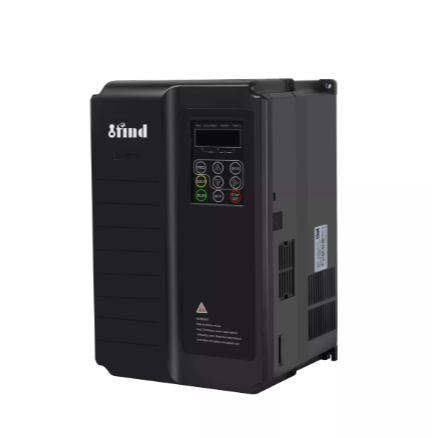
For elevator projects that require smoother start performance, the IFIND SD320L Closed Loop Elevator Inverter is a suitable solution. It is designed for elevator applications and supports asynchronous AC induction motors and permanent magnet synchronous motors. It also supports multiple PG card options, including AB, ABZ, EnDat 1313, and Sin/Cos 1387, which makes it adaptable for both geared and gearless elevator systems.
The product is especially relevant to Elevator Rollback because it includes functions such as anti-rollback for PMSM gearless machines, pre-torque function, integrated brake control, smooth ride performance, and five independent S-ramps. These features are directly connected with the start-up stage where rollback usually happens.
For procurement teams, the main value of a Closed Loop Elevator Inverter is not only one anti-rollback parameter. The value is the combination of:
Closed-loop vector control for accurate torque response
Encoder feedback through 1313 or 1387 PG card
Pre-torque function for stable brake release
Integrated brake control for coordinated start sequence
S-ramp adjustment for smoother acceleration and deceleration
Support for synchronous and asynchronous elevator motors
UPS rescue function for home or industrial elevator applications
Comprehensive diagnostics for maintenance and troubleshooting
For start-up rollback problems, the key point is traction motor control rather than door movement control. A Closed Loop Elevator Inverter is more closely related to torque build-up, encoder feedback, pre-torque output, and brake release timing, which are the main factors behind Elevator Rollback.
Parameter Areas to Check During Commissioning
A Closed Loop Elevator Inverter must be correctly commissioned to deliver strong anti-rollback performance. Even a good inverter may not perform well if the motor data, PG card, brake logic, or pre-torque settings are wrong. For this reason, anti-rollback commissioning should follow a structured process.
Commissioning Area | What to Check | Impact on Elevator Rollback |
Motor parameters | Rated current, voltage, power, frequency, speed, motor type | Incorrect data reduces vector control accuracy |
Encoder setup | Encoder type, direction, PG card selection, wiring quality | Poor feedback can cause rollback, vibration, or speed error |
Pre-torque | Torque gain, load signal, torque ramp time | Directly affects start stability |
Brake control | Brake open delay, brake close delay, brake output timing | Controls the transfer from brake holding to motor holding |
S-curve | Start acceleration, jerk limitation, leveling curve | Improves passenger comfort after rollback is controlled |
Load test | Empty car, rated load, upward and downward runs | Confirms anti-rollback performance under real conditions |
For best results, the technician should adjust one parameter group at a time. If too many values are changed together, it becomes difficult to identify which parameter solved or worsened the problem. A Closed Loop Elevator Inverter provides the control capability, but careful commissioning turns that capability into a stable elevator ride.
During the final test, the elevator should be checked under multiple load conditions. Empty-car testing alone is not enough. A car with passengers, a car close to rated load, and upward/downward travel can all show different rollback behavior. A strong Elevator Anti-Rollback Solution must remain stable in all these conditions.
Common Mistakes When Solving Elevator Rollback
Some elevator teams try to solve Elevator Rollback by increasing starting torque aggressively. This may reduce downward slipping, but it can create another problem: upward jerk. A correct Elevator Anti-Rollback Solution should balance holding torque and comfort. The goal is not to apply maximum torque. The goal is to apply the correct torque at the correct time.
Common mistakes include:
Using open-loop control for a demanding gearless elevator. This may not provide enough feedback accuracy at zero speed.
Ignoring encoder signal quality. Noise, wrong shielding, or incorrect PG card selection can create unstable torque response.
Opening the brake too early. If torque is not ready, the car may slip.
Setting pre-torque too high. This can cause a start jerk in the opposite direction.
Skipping loaded tests. Anti-rollback performance must be verified under different load conditions.
Confusing door drive problems with traction drive problems. Door controller inverters improve door operation, but Elevator Rollback is mainly related to traction motor control.
How to Choose a Closed Loop Elevator Inverter for Anti-Rollback Projects
When selecting a Closed Loop Elevator Inverter, buyers should consider more than rated power. Anti-rollback performance depends on the whole match between inverter, motor, encoder, brake, and controller. A good product selection process should include the following points:
Motor type: Confirm whether the elevator uses an asynchronous induction motor or a permanent magnet synchronous motor.
Encoder type: Check whether the project requires AB, ABZ, EnDat 1313, or Sin/Cos 1387 feedback.
Voltage and power range: Match the inverter to the elevator motor and site power supply.
Brake control: Choose an Elevator Inverter with integrated brake control logic.
Pre-torque support: Confirm whether the drive supports load cell signal or internal torque estimation.
Ride comfort functions: Look for S-ramp, low-speed stability, and smooth acceleration control.
Rescue operation: For residential and villa elevators, UPS rescue support can be an important feature.
Diagnostics: Fault records and monitoring functions help reduce maintenance time.
The right Closed Loop Elevator Inverter should solve the technical problem and support long-term maintenance. For distributors, control cabinet manufacturers, and elevator modernization companies, this means fewer start-up complaints, easier commissioning, and better passenger experience.
During product selection, the broader Elevator Inverter range can help buyers compare open-loop drives, closed-loop drives, door controller drives, PG card options, and complete elevator control solutions according to the actual elevator system.
Conclusion
Elevator Rollback at start is a control problem that appears in a mechanical moment. The brake opens, gravity acts on the car and counterweight, and the motor must take over the load immediately. If torque is delayed, too weak, too strong, or based on inaccurate feedback, passengers will feel slipping or jerk.
A Closed Loop Elevator Inverter is one of the most effective ways to solve this problem. By using encoder feedback, PG card communication, pre-torque compensation, integrated brake control, and smooth S-ramp settings, the inverter can hold the elevator car stable before movement begins. This makes it a strong Elevator Anti-Rollback Solution for gearless PMSM elevators, geared elevator systems, villa elevators, residential elevators, commercial elevators, and cargo elevators.
In summary, Elevator Rollback is best solved through a complete drive control strategy, not by adjusting one parameter alone. IFIND provides elevator drive solutions designed around closed-loop feedback, pre-torque output, brake coordination, and smooth low-speed control. With a Closed Loop Elevator Inverter, elevator systems can achieve more stable torque build-up during brake release, while the Elevator Inverter series supports different traction motor configurations and project requirements.
FAQs
1. What is the difference between elevator rollback and elevator start jerk?
Elevator rollback is the reverse movement of the elevator car when the brake releases and the motor has not yet produced enough holding torque. Start jerk is a sudden movement or shock during acceleration. Rollback is usually caused by insufficient or delayed torque, while start jerk may be caused by excessive torque, poor S-curve settings, or incorrect brake timing.
2. Can a Closed Loop Elevator Inverter work without a load cell?
Yes, a Closed Loop Elevator Inverter can work without a load cell in many applications, depending on the motor type and control strategy. When no load cell is used, the inverter relies more on encoder feedback, motor current estimation, and internal vector control logic. However, a load cell can improve pre-torque accuracy in systems where passenger load changes greatly.
3. Which PG card is better for elevator anti-rollback, 1313 or 1387?
Both 1313 and 1387 PG card options can support anti-rollback control when matched correctly with the motor and inverter. A 1387 Sin/Cos encoder can provide smooth low-speed feedback, while a 1313 EnDat encoder provides digital absolute position feedback and strong noise resistance. The best choice depends on the elevator motor, encoder interface, control cabinet design, and required ride performance.
4. Why does an elevator still roll back after pre-torque is enabled?
If rollback continues after pre-torque is enabled, the issue may come from wrong motor parameters, incorrect encoder direction, weak PG card signal, poor brake timing, unsuitable torque gain, or unstable load feedback. The technician should check the complete start sequence instead of only increasing the pre-torque value.
5. Is a Closed Loop Elevator Inverter suitable for elevator modernization?
Yes, a Closed Loop Elevator Inverter is suitable for many elevator modernization projects, especially when the old system has start slipping, leveling error, vibration, or poor ride comfort. Before selection, the project team should confirm motor type, encoder type, brake control requirement, voltage class, power rating, and whether the elevator uses a geared or gearless traction system.