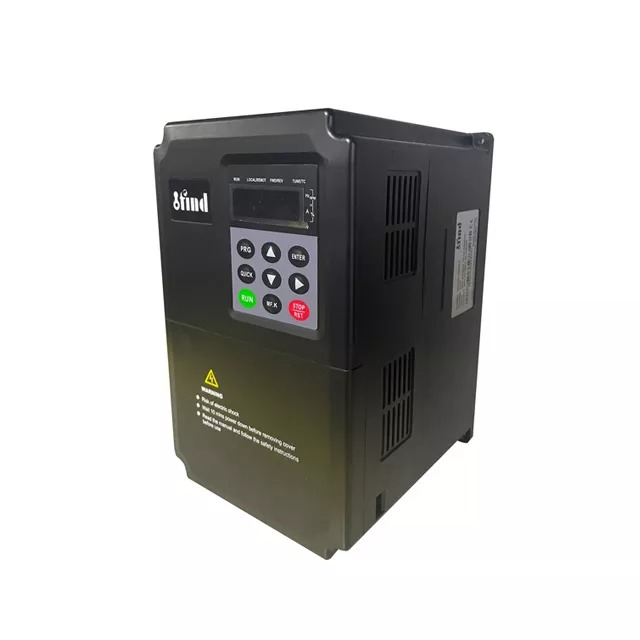
In the elevator industry, technology is often judged by what the passenger doesn't feel. A high-quality elevator system is defined by its silence, its stability, and above all, its seamless motion. When a passenger enters a lift, they expect a transition from standstill to full speed—and back to standstill—that is so smooth it is almost imperceptible to the inner ear.
Achieving this level of invisible quality is an immense engineering challenge. It requires managing several tons of steel, counterweights, and human cargo against the relentless pull of gravity. The secret to mastering this challenge lies in Closed-Loop Vector Control (CLVC). In this comprehensive guide, we will explore how the advanced vector algorithms within the IFIND SD320L inverter eliminate start-up jitters and stopping vibrations to deliver a world-class passenger experience.
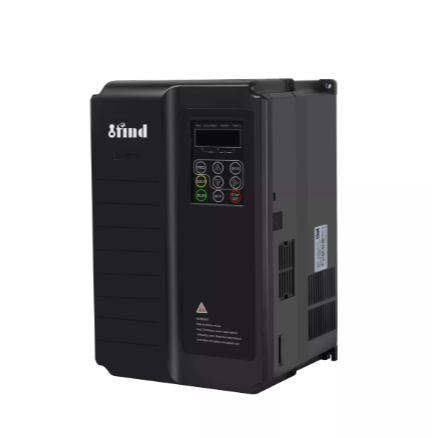
The Science of Motion: What is Closed-Loop Vector Control?
To understand how the SD320L improves comfort, we must first understand the evolution of motor control. Traditional inverters used V/F control (Voltage/Frequency), which is an open-loop system. In V/F control, the inverter sends a fixed pattern of power to the motor and hopes the motor follows it. However, because there is no feedback, the motor often lags behind the command, leading to slips, vibrations, and poor torque response at low speeds.
Closed-Loop Vector Control, also known as Field-Oriented Control (FOC), is entirely different. It treats an AC induction motor or a Permanent Magnet Synchronous Motor (PMSM) like a high-performance DC motor.
The Mathematical Transformation
The SD320L’s CPU performs complex mathematical transformations (Park and Clark transformations) thousands of times per second. It decomposes the stator current into two independent components:
Magnetizing Flux Current ($I_d$): Responsible for creating the magnetic field.
Torque-Producing Current ($I_q$): Responsible for the physical force that moves the elevator.
By using a PG Encoder Card (such as the 1387 or 1313 mentioned in our previous guides), the SD320L receives instantaneous feedback on the rotor's position. This closed loop allows the inverter to adjust the torque current in real-time to compensate for load changes, ensuring the motor does exactly what the algorithm commands.
Mastering the Start: Eliminating Rollback and Jerks
The most difficult moment for any elevator inverter is the Start Phase. This is the millisecond when the mechanical brake releases, and the motor must take full responsibility for the load.
The Challenge of Gravity
If the inverter does not provide enough torque the moment the brake opens, the elevator car will drop slightly—a terrifying sensation for passengers known as Rollback. Conversely, if the inverter provides too much torque too quickly, the car will jerk upward.
The SD320L Solution: Pre-Torque Compensation
The IFIND SD320L utilizes an advanced Pre-Torque algorithm. Before the mechanical brake is even commanded to open, the inverter can calculate the required torque based on:
Load Cell Feedback: Reading an analog signal from a weight sensor under the car.
Intelligent Current Estimation: If no load cell is present, the SD320L uses its internal Senseless logic to estimate the load based on the motor's magnetic feedback.
By pre-loading the motor with the exact amount of torque needed to hold the car steady against gravity, the SD320L ensures that when the brake releases, the car remains perfectly stationary. This transition from held by brake to held by motor is so smooth that passengers feel zero movement.
Anti-Rollback Logic
Even in challenging conditions, the SD320L’s high-speed feedback loop monitors the encoder for any movement as small as 0.1mm. If the car tries to slip, the inverter immediately compensates with counter-torque, providing a Zero-Speed Holding capability that is essential for modern gearless PMSM systems.
The Travel Phase: The Power of the S-Ramp Algorithm
Once the elevator is in motion, comfort depends on how the speed increases and decreases. Humans are not sensitive to constant speed, but we are highly sensitive to Jerk—which is the rate of change of acceleration.
Five Independent S-Ramps
The SD320L features a sophisticated S-Ramp (S-Curve) generator. Unlike a linear ramp that creates sharp corners in the velocity profile, an S-Ramp rounds off the transitions between standstill, acceleration, and full speed.
The SD320L allows technicians to customize five distinct segments of the curve:
Start Jerk: The smoothness of the initial movement.
Acceleration: The steady climb to full speed.
End of Acceleration Jerk: The transition from speeding up to constant speed.
Deceleration Jerk: The start of the slowing down process.
Stop Jerk: The final approach to the floor level.
By fine-tuning these rounding parameters, the SD320L ensures that the G-force felt by passengers changes gradually, preventing the stomach-drop feeling often associated with cheaper control systems.
Solving the Vibration Problem: Torque Ripple Reduction
Vibration in an elevator car often comes from Torque Ripple—tiny, high-frequency fluctuations in the motor’s force. If the inverter's output current is not a perfect sine wave, the motor will stutter, creating a hum or a physical vibration that travels up the ropes and into the car.
The IFIND SD320L addresses this through:
High Carrier Frequency Switching: Using premium Infineon or Fuji IGBTs, the SD320L operates at high switching frequencies that minimize harmonic distortion.
Dynamic Current Loop Tuning: The inverter's software automatically adjusts its control gains to match the specific electrical characteristics of the motor, effectively smoothing out the magnetic flux.
The Perfect Finish: Precision Leveling and Soft Landing
The final impression an elevator leaves on a passenger is the stop. A rough stop or an inaccurate step (where the car is not level with the floor) is not only a comfort issue but a safety hazard.
Zero-Speed Torque
With Closed-Loop Vector Control, the SD320L can maintain 100% torque at 0Hz speed. This means it can bring the car to a complete electrical stop and hold it there before the mechanical brake even closes. This eliminates the clunk sound and the sudden bite of the brake that happens when an elevator is stopped mechanically while still moving slightly.
Direct Landing
Traditional elevators use a creeping speed—they slow down significantly and crawl toward the floor for several seconds. This is inefficient and feels unsteady to passengers. The SD320L’s high-precision encoder interface enables Direct Landing. The inverter calculates the distance remaining to the floor in real-time and follows a smooth S-curve all the way to zero speed, stopping exactly level with the floor sill every single time.
Hardware Matters: Why IFIND SD320L Outperforms the Competition
Software algorithms are only as good as the hardware that runs them. To achieve the precision required for Closed-Loop Vector Control, the SD320L is built with industry-leading components:
IGBT (The Muscles): We use STARPOWER, INFINEON, or FUJI brands. These high-speed switches respond instantly to the vector control commands.
Capacitors (The Reservoir): Rubycon or Jianghai capacitors ensure a clean, stable DC bus, which is critical for accurate torque calculation.
CPU (The Brain): A high-performance digital signal processor (DSP) capable of calculating the vector math in microseconds, ensuring zero latency between the encoder feedback and the motor output.
Cooling (Reliability): Fans from Pelko or Nidec keep the internal electronics at optimal temperatures, ensuring that the ride quality doesn't degrade even during high-traffic hours in commercial buildings.
The Result: A Better Lifecycle for Your Equipment
While the primary goal of Closed-Loop Vector Control is passenger comfort, it also offers significant mechanical benefits for the building owner:
Reduced Mechanical Stress: Smooth starts and stops mean less wear on the traction sheave, bearings, and gearbox.
Extended Rope Life: Eliminating jerks reduces the snap tension on the steel ropes, preventing premature stretching.
Energy Efficiency: By applying only the exact amount of torque needed, the SD320L reduces wasted electrical energy compared to traditional V/F drives.
Conclusion: Elevate Your Standards with IFIND
Ride comfort is no longer a luxury—it is an expectation. Whether you are installing a new villa elevator or modernizing a commercial high-rise, the IFIND SD320L series provides the advanced Closed-Loop Vector Control necessary to meet the highest global standards.
By combining precise torque management, customizable S-ramp profiles, and world-class hardware, we ensure that every journey is silent, stable, and smooth.
Are you looking to eliminate vibration or leveling issues in your current project? Let our technical experts help you optimize your SD320L settings for the perfect ride.


