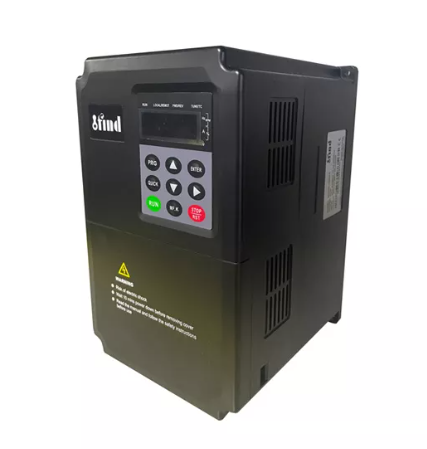
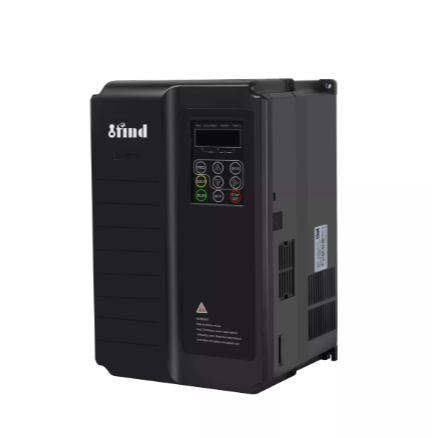
In today’s industrial environment, flexibility and cost‑efficiency are critical. For many OEMs and system integrators, maintaining separate drives for different motor types means increased SKU counts, higher inventory costs, and more complex logistics. The SD320L frequency inverter from IFIND addresses this challenge with intelligent compatibility design — enabling a single inverter platform to support both synchronous and asynchronous motors reliably.
What’s the Difference Between Synchronous and Asynchronous Motors?
Before we dive into the SD320L’s compatibility, let’s briefly clarify what synchronous and asynchronous motors are:
Asynchronous (Induction) Motors
Also known as induction motors, they operate with the rotor lagging behind the rotating magnetic field produced by the stator — a phenomenon called “slip.”
These motors are simple, rugged, self‑starting, and economical, making them the dominant choice in general industrial applications such as pumps, fans, and conveyors.
Synchronous Motors
Synchronous motors rotate at exactly the same speed as the magnetic field (synchronous speed), maintained through permanent magnets or DC excitation on the rotor.
They offer constant speed regardless of load and can provide higher precision and improved efficiency in specific applications.
While both types are AC motors, their electrical and mechanical behaviors differ — historically requiring different control strategies when driven by inverters.
Why Motor Compatibility Matters
Traditionally, variable frequency drives (VFDs) were optimized for either induction (asynchronous) or synchronous motors because of the different control demands:
Asynchronous drives typically control motors by adjusting stator frequency and voltage to vary speed and torque.
Synchronous drive control often needs additional considerations such as rotor position feedback to maintain exact speed locking.
This technical divergence has led many manufacturers to stock two separate drive lines — increasing inventory, training, and maintenance costs.
How the SD320L Inverter Bridges the Gap
The IFIND SD320L inverter utilizes advanced vector control logic and flexible encoder support to handle both synchronous and asynchronous motor types with one platform. Here’s how it works:
1. Universal Control Logic
The SD320L supports senseless vector control as well as encoder‑based closed‑loop operation. This means:
For asynchronous motors, it can apply vector control without an encoder or use feedback for enhanced torque response.
For synchronous motors, it can lock the rotor position using encoder feedback (e.g., Heidenhain 1313 or 1387 PG cards), ensuring precise speed and performance.
This dual control strategy allows a single inverter to adapt to different motor electromechanical characteristics.
2. Flexible Encoder Interface
Encoder cards (AB, ABZ, Endat 1313, Sin/Cos 1387) allow the SD320L to decipher rotor position and speed exactly — a requirement for synchronous motor control and beneficial for enhanced performance in closed‑loop induction motor drives.
This flexibility means you don’t need dedicated drives per motor type — the same SD320L unit can interface with various encoder standards depending on the application.
3. Advanced Motor Support
Key technical features that enable broad motor compatibility include:
Comprehensive drive modes for both motor types
Dynamic braking and anti‑rollback functions (critical for gearless elevator PMSM motors)
Pre‑torque and rescue functions useful in elevator control systems
Onboard Modbus‑RTU communication for easy system integration
These capabilities allow the SD320L to match performance expectations across applications from general industrial drives to precise motion systems.
How This Reduces Customer Inventory Pressure
By supporting both synchronous and asynchronous motors in one platform, the SD320L helps customers in several ways:
1. Fewer SKUs to Manage
Instead of stocking separate drives for each motor type, customers need only the SD320L and optional encoder cards — significantly reducing warehouse complexity.
2. Simplified Training and Support
Maintenance teams and commissioning engineers only need to master one inverter platform, lowering training costs and accelerating on‑site setup.
3. Broader Application Coverage
Whether a project uses permanent magnet synchronous motors (PMSM) or traditional induction motors, one drive can handle both — expanding the SD320L’s usability across products without repeating hardware purchases.
Conclusion
The SD320L inverter breaks down traditional barriers between motor types by combining flexible control logic, encoder adaptability, and rich feature sets. This one‑platform approach not only enhances system performance but also delivers real operational value by reducing inventory pressure and simplifying industrial drive deployment.