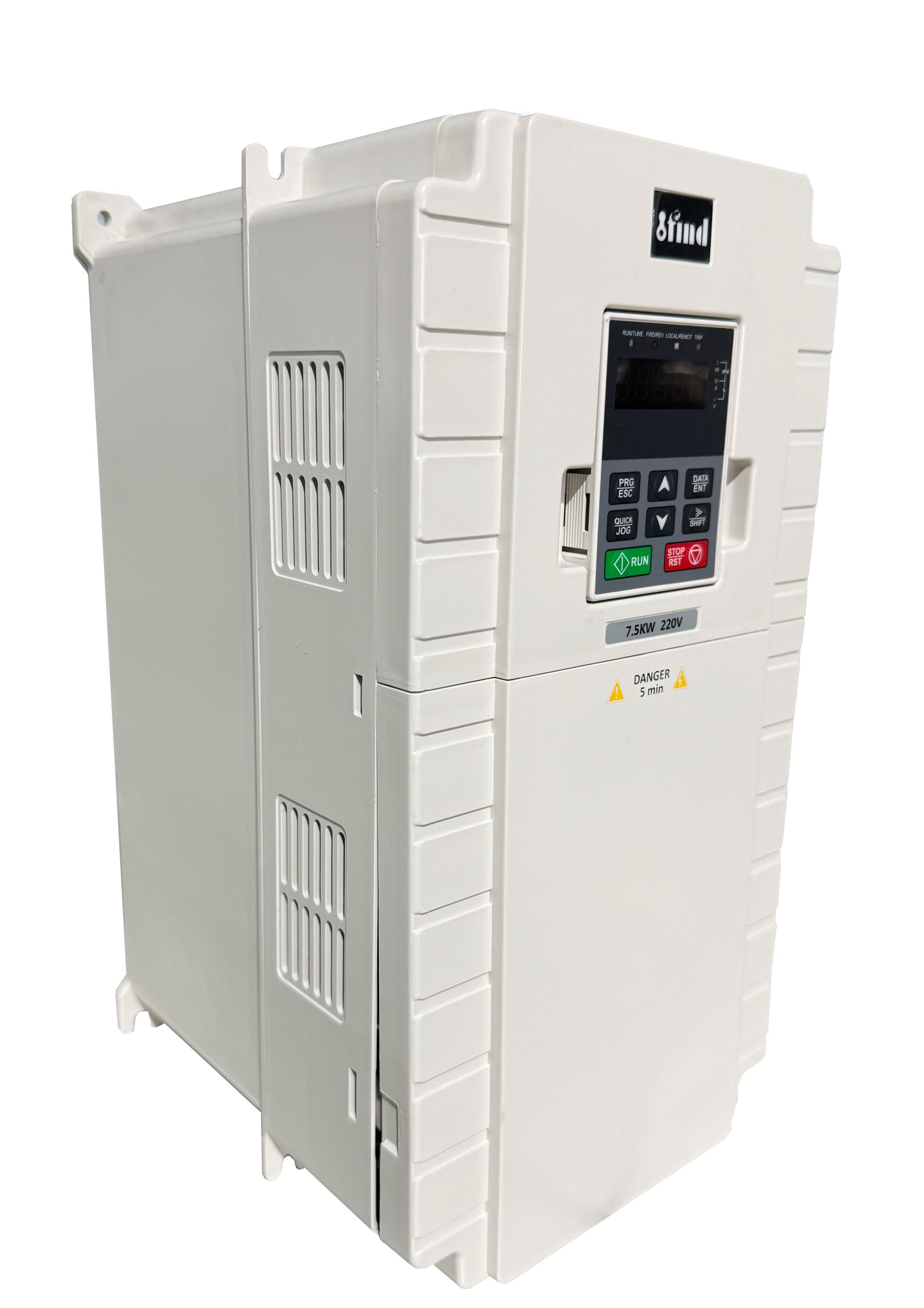
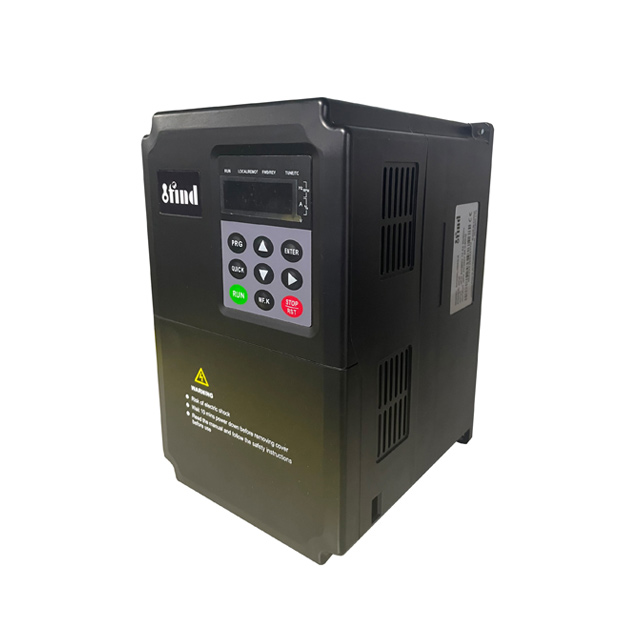
Open-Loop Single-Phase 220V Elevator Frequency Inverter with SVC
The IFIND 3-in-1 MPPT Hybrid Solar Inverter combines a power inverter, MPPT solar controller and grid charger in one compact unit. It can power daytime loads directly from PV without a battery, while still supporting lead-acid or lithium storage when backup is required. Pure sine wave output, flexible source priority, communication options and multiple protection functions make it suitable for home systems and properly matched pump loads.
The Open Loop single phase 220V elevator Frequency Inverter is a cutting - edge device designed specifically for enhancing the performance of single - phase 220V elevators. In the realm of elevator systems, where smooth operation, energy efficiency, and reliability are of utmost importance, this frequency inverter plays a crucial role.
Unlike closed - loop systems that require additional feedback devices, the open - loop design simplifies the structure while still providing a high level of functionality. It is engineered to regulate the speed and torque of the elevator motor precisely, enabling seamless acceleration, deceleration, and stable operation at different floors. With a single - phase 220V power input, it is suitable for a wide range of elevator installations, especially in areas where this power supply is commonly available. This makes it an ideal choice for small - to medium - sized buildings, residential complexes, and commercial establishments with limited elevator requirements.
Features
Precise Speed Control
One of the key features of this frequency inverter is its ability to offer precise speed control. Through advanced control algorithms, it can adjust the motor speed according to the elevator's operational needs. Whether the elevator is moving empty or carrying a full load, the inverter can maintain a consistent and smooth speed, ensuring a comfortable ride for passengers. For example, during peak hours when the elevator is frequently in use, it can quickly and accurately adjust the speed to optimize travel time between floors.
Energy - efficient Operation
The Open Loop single phase 220V elevator Frequency Inverter is designed with energy efficiency in mind. By adjusting the motor's power consumption based on the actual load and speed requirements, it significantly reduces energy waste. This not only helps building owners cut down on electricity bills but also contributes to environmental sustainability. Compared to traditional elevator control systems, this frequency inverter can achieve energy savings of up to 30%, making it a cost - effective and green solution.
User - friendly Interface
It comes with a user - friendly interface that allows for easy installation, commissioning, and maintenance. The control panel is equipped with clear LED displays and intuitive buttons, enabling technicians to quickly set parameters such as speed limits, acceleration and deceleration times, and fault diagnosis. Even for those with limited technical knowledge, the interface is straightforward enough to understand and operate, reducing the need for extensive training.
Reliable Protection Functions
To ensure the safety and long - term operation of the elevator system, the frequency inverter is integrated with multiple reliable protection functions. These include over - voltage protection, under - voltage protection, over - current protection, and over - temperature protection. In the event of any abnormal conditions, the inverter will automatically trigger protective actions to prevent damage to the motor and other components, safeguarding the entire elevator system.
Compatibility and Adaptability
This frequency inverter is highly compatible with a variety of single - phase 220V elevator motors. It can adapt to different motor characteristics, such as power ratings and winding configurations. Additionally, it can work in harmony with other elevator control components, such as door controllers and floor selection systems, to form a complete and efficient elevator control solution.
Control Mode: Sensorless Vector Control (SVC), V/F Control
Overload Capacity:good performance for protection
60s with 150% of rated current, 10s with 180% of rated current
Starting Torque: 150% of rated torque at 0.5Hz (SVC)
Speed Adjusting Range: 1:100 (SVC)
Speed Accuracy: ± 0.5% of maximum speed (SVC)
Carrier Frequency: 0.5kHz ~15.0kHz
Reference Frequency Source: keypad, analog input, serial communication, multi-step speed, PID and so on
The combination of multi- modes and switching between different modes can be realized
Torque Control Function: Provide multiple torque setting source
PID Control Function
Multi-step Speed Control Function: 8 steps speed can be set
Traverse Control Function
None-Stop when instantaneous power off
Speed trace Function: Start the running motor smoothly and stable
QUICK/JOG Key: User defined shortcut key can be realized
Automatic Voltage Regulation (AVR) Function
Automatically keep the output voltage stable when input voltage fluctuating
Up to 24 fault protections
Sepecial hardware higher value capacitance
Single phase 220V application
Applications
Residential Buildings
In residential buildings, especially those with a limited number of floors, the Open Loop single phase 220V elevator Frequency Inverter is an excellent choice. It provides a smooth and comfortable ride for residents, whether they are carrying groceries, luggage, or simply commuting between floors. The energy - efficient operation also helps keep the running costs of the building's elevator system in check, which is beneficial for property management and homeowners.
Small - scale Commercial Establishments
For small - scale commercial establishments like local shops, cafes, and small offices, this frequency inverter can meet the elevator requirements effectively. It ensures that customers and employees can move between different floors conveniently and safely. The user - friendly interface makes it easy for the building management to maintain and operate the elevator, reducing the need for professional technicians for routine tasks.
Medical Facilities
In medical facilities such as clinics and small hospitals, the reliability and smooth operation of elevators are crucial for transporting patients, medical equipment, and supplies. The precise speed control and protection functions of the frequency inverter guarantee a stable and safe ride, which is essential in a medical environment where time and patient comfort are of the essence.
Educational Institutions
Schools, colleges, and universities often have buildings with multiple floors. The Open Loop single phase 220V elevator Frequency Inverter can be installed in these buildings to provide accessible transportation for students, teachers, and staff. Its energy - saving features are also in line with the sustainable development goals of educational institutions, helping to reduce their overall energy consumption.
IGBT
STARPOWER/ INFINEON/FUJI
FAN
PELKO/NIDEC
CAPACITORS
RUBYCON/JIANGHAI
ELECTRONIC
DELTA
Open Loop single phase 220V elevator Frequency Inverter sales point
1.I/O features. 2.Programmable Digital Input:Provide 4 terminals which can accept ON-OFF inputs.
3.Programmable Analog Input:FV can accept input of 0 ~10V; FI can accept input of 0~10V or 0~20mA.
4.Programmable Open Collector Output:Provide 1 output terminal (open collector output or high-speed pulse output)
5.Relay Output: Provide 1 output terminal. 6.Analog Output: Provide 1 analog output terminal, whose output scope can be 0/4~20 mA or 0~10 V, as chosen.
RS-485 communication interface is optional. And it completely support MODBUS communication protocol. Provided with protection function for many malfunction: overcurrent, overvoltage, undervoltage, overheating, default phase and overload, etc. Special application and for the special world area ,such as the 220V country,like Mexico and so on. Self-learning function: completely solve the unsatisfactory problem of vector control and give full play to the performance of motor.and good suitable for ender user operation.
Product Overview
The SD310L is an open-loop elevator frequency inverter developed for lift systems using a single-phase 220V power supply. It provides Sensorless Vector Control and V/F control for managing motor speed, torque, acceleration, and deceleration without requiring encoder feedback in SVC mode.
The drive combines overload capability, multi-step speed settings, programmable I/O, automatic voltage regulation, motor parameter identification, and multiple fault protections in one platform. It can be integrated with a compatible elevator controller for residential lifts, low-rise passenger elevators, cargo lifts, and selected retrofit projects.
As an open-loop drive, the SD310L is intended for applications where its speed accuracy, starting torque, motor compatibility, and control method satisfy the actual elevator design requirements.
Open-Loop SVC Control
Encoder-Free Motor Control
Sensorless Vector Control estimates motor operating conditions through the drive’s internal motor model. It does not require an encoder to provide continuous speed feedback.
Removing the encoder can simplify wiring and reduce the number of feedback components in an elevator drive system. Correct motor data and commissioning remain essential because SVC performance depends on the accuracy of the motor model.
Low-Speed Torque
In SVC mode, the SD310L provides 150% of rated starting torque at 0.5Hz. This supports controlled motor startup in compatible elevator systems where adequate low-speed torque is required.
Starting performance also depends on motor selection, load balance, brake timing, acceleration settings, and mechanical conditions. The drive rating should therefore be selected using motor current and duty requirements rather than motor power alone.
Speed Regulation
The SVC speed adjustment range is 1:100, with published speed accuracy of ±0.5% of maximum speed. This level of control suits lift applications that do not require encoder-based positioning or zero-speed holding.
For high-speed elevators, high-rise projects, rapidly changing loads, or systems requiring more precise floor leveling, a closed-loop drive should be evaluated.
Elevator Motion Control
Adjustable Speed References
The SD310L accepts speed and frequency commands from several sources:
Built-in keypad
Analog input
Serial communication
Multi-step speed settings
PID control
Combined command modes
This allows the drive to work with different elevator controller signal arrangements.
Eight-Step Speed Control
Up to eight speed steps can be configured for startup, normal travel, inspection, leveling, or other operating stages defined by the elevator controller.
Each speed stage should be coordinated with the acceleration and deceleration settings. Incorrect transitions may affect ride comfort, stopping distance, and system response.
Torque Control
Multiple torque-reference sources are available for applications that require adjustable torque limits. Torque-related parameters should be configured using the elevator load, motor data, traction system, and brake sequence.
Speed Tracking
The speed-tracking function can identify a rotating motor and support a controlled restart. Its use in an elevator system must be coordinated with the controller logic and applicable safety sequence.
Automatic Voltage Regulation
Automatic Voltage Regulation helps maintain a more stable output voltage when the incoming power supply fluctuates within the drive’s permitted operating range.
AVR does not replace suitable input protection or compensate for a supply that falls outside the inverter’s specified voltage and frequency limits.
Setup and Commissioning
Enter the Motor Data
Before operation, the technician should enter the motor’s rated voltage, current, frequency, speed, and power. These values should come directly from the motor nameplate or manufacturer documentation.
Run Motor Identification
The motor identification function allows the drive to establish the electrical parameters required by the SVC model. The elevator must be placed in a safe commissioning condition before this process begins.
Configure the Motion Profile
Acceleration, deceleration, inspection speed, travel speed, leveling speed, and stop behavior should be configured around the mechanical system and elevator controller.
A gradual commissioning process is recommended:
Verify motor and power wiring.
Confirm input and output assignments.
Test motor direction at low speed.
Check brake opening and closing sequence.
Test inspection operation.
Confirm acceleration and deceleration.
Test normal operation under controlled load.
Review fault records and operating current.
Verify the Brake Sequence
The drive controls motor output but does not replace the elevator’s mechanical brake or safety controller. Brake release and closing signals must follow the required motor torque and elevator controller sequence.
The car should not be placed into passenger operation until brake timing, travel direction, leveling behavior, emergency stop, and all external safety circuits have been tested.
I/O and Communication
The SD310L provides configurable inputs and outputs for connection to an elevator controller and related control devices.
Interface
Function
Digital Inputs
Four programmable ON/OFF input terminals
FV Analog Input
0–10V input
FI Analog Input
Selectable 0–10V or 0–20mA input
Open-Collector Output
One programmable output or high-speed pulse output
Relay Output
One programmable relay output
Analog Output
Selectable 0/4–20mA or 0–10V output
RS485
Optional communication interface
Communication Protocol
Modbus support with the RS485 option
The programmable terminals can be assigned to functions such as run commands, direction selection, multi-step speed, fault reset, operating status, or fault indication according to the system design.
Terminal definitions, signal voltage, grounding, shielding, and communication parameters should be verified during control-panel design.
Drive Protection
The SD310L provides multiple drive-level protections for detecting abnormal electrical and thermal conditions.
Protection functions include:
Overcurrent protection
Overvoltage protection
Undervoltage protection
Overload protection
Overtemperature protection
Phase-loss detection
Additional drive and motor fault monitoring
When a fault occurs, the technician should identify and correct the cause before resetting the drive. Repeated resets without diagnosis may expose the motor, inverter, or mechanical system to further damage.
Role in the Elevator System
The frequency inverter manages motor speed and torque. It does not replace the elevator controller or any code-required safety device.
A complete elevator system may also require:
Mechanical brake control
Overspeed governor
Safety gear
Door interlocks
Terminal and final limit switches
Emergency stop circuit
Load monitoring
Inspection controls
Emergency rescue equipment
Other devices required by local elevator regulations
All safety circuits must remain effective independently of normal drive operation.
Elevator Applications
Residential and Villa Lifts
The single-phase 220V supply configuration can suit residential and villa lift projects where three-phase utility power is unavailable. Motor current, lift capacity, travel speed, number of floors, and starting conditions must be checked before selection.
Low-Rise Passenger Elevators
The SD310L can be considered for low-rise passenger elevator systems where open-loop SVC provides sufficient speed control and torque performance.
The final design should be approved by the elevator system integrator and tested for leveling, braking, load variation, and passenger operation.
Cargo Lifts
Cargo lift applications may use open-loop control when the load pattern, motor, brake system, and required positioning accuracy are compatible with the drive.
Heavy or rapidly changing loads require a separate torque and overload assessment.
Elevator Retrofit Projects
The inverter may be used when upgrading a compatible 220V lift control system. Before replacement, compare the original drive’s power supply, motor output, rated current, braking arrangement, I/O logic, communication method, and installation dimensions.
Replacing an existing inverter should not be treated as a direct one-for-one substitution until these parameters have been checked.
Technical Specifications
Parameter
Specification
Model
SD310L
Power Supply
Single-phase 220V
Control Modes
Sensorless Vector Control and V/F control
Overload Capacity
150% rated current for 60 seconds; 180% for 10 seconds
Starting Torque
150% rated torque at 0.5Hz in SVC mode
Speed Adjustment Range
1:100 in SVC mode
Speed Accuracy
±0.5% of maximum speed in SVC mode
Carrier Frequency
0.5–15.0kHz
Frequency References
Keypad, analog input, serial communication, multi-step speed and PID
Multi-Step Speed
Eight configurable steps
Torque Control
Multiple torque-reference sources
Voltage Control
Automatic Voltage Regulation
Digital Inputs
Four programmable inputs
Analog Inputs
0–10V and selectable 0–10V/0–20mA
Open-Collector Output
One programmable output
Relay Output
One programmable relay output
Analog Output
0/4–20mA or 0–10V
Communication
Optional RS485 with Modbus
Fault Protection
Up to 24 drive protection functions
Quality and Engineering Support
IFIND applies an ISO 9001 quality management system and reports CE certification and BV field verification completed in 2024. Drives are assembled and tested before packing to check basic electrical and operating performance.
Technical support is available for:
Drive model selection
Motor data matching
Parameter configuration
I/O assignment
Modbus communication
Fault diagnosis
Application-specific setup
For project evaluation, customers can request the applicable product datasheet, installation manual, wiring information, certificate documents, and configuration details.
FAQs
Does SVC operation require an encoder?
No. Sensorless Vector Control estimates motor speed and operating conditions without encoder feedback. Motor nameplate data and identification must be entered correctly for the control model to work as intended.
What is the difference between open-loop and closed-loop elevator control?
Open-loop control does not use continuous encoder feedback. It offers simpler wiring and lower system complexity but provides less low-speed and positioning accuracy than closed-loop control. Closed-loop control is normally evaluated for high-speed, high-rise, heavy-duty, or precise-leveling applications.
Can the SD310L work with any 220V elevator motor?
No. Compatibility depends on the motor type, rated voltage, phase, current, power, frequency, speed, insulation, and control requirements. The motor nameplate and elevator specifications should be reviewed before selecting the drive.
How should the inverter power rating be selected?
Selection should consider the motor’s rated current, required starting torque, overload duty, lift capacity, travel speed, counterweight ratio, acceleration time, and operating frequency. A drive should not be selected only by comparing its kW rating with the motor kW.
Does the inverter replace the elevator controller?
No. The inverter controls motor speed and torque. The elevator controller manages travel commands, floor logic, door operation, safety sequence, brake commands, fault handling, and other system functions.
What information is needed before commissioning?
Prepare the motor nameplate data, elevator rated load, travel speed, traction or lifting arrangement, controller signal definition, brake sequence, required speed stages, I/O list, and communication settings.
Does the inverter support Modbus communication?
Yes, Modbus communication is supported when the optional RS485 interface is included. Confirm the hardware configuration, baud rate, address, parity, register map, and communication wiring before integration.
What should be checked when replacing an existing elevator drive?
Compare the input supply, motor output, rated current, overload rating, braking configuration, control terminals, analog signal ranges, communication protocol, mounting dimensions, and required safety functions.
Can the drive be used for both passenger and cargo lifts?
It may be used in compatible passenger or cargo lift systems when open-loop control meets the required load, speed, torque, leveling, and safety conditions. Final suitability must be assessed by the elevator system integrator.
What happens when the drive reports an overcurrent fault?
Check motor wiring, motor parameters, brake timing, acceleration settings, mechanical resistance, load condition, and drive capacity. The fault should not be repeatedly reset until its cause has been identified.
Need the SD310L Matched to Your Elevator Motor?
Send us the motor nameplate, lift capacity, travel speed, input power, controller signals, and required communication method. Our team will review the drive selection and prepare a configuration for your project.
VF and VECTOR VFD inverter are already widely used in the world, The software is powerful and has a variety of control methods. Built-in PID, simple PLC; The inverter has the advantages of good speed regulation performance, high efficiency, stable performance, high reliability, strong overload capacity, etc., widely used in weaving, chemical fiber, printing and dyeing, plastics, light industry, machinery, chemical, steel, paper and other industries application
Solar inverter are already widely used in the world, Series applies to transforming three phase 380V or Single phase 220V submersible deep well pump into solar water pump system. It works this way that direct current produced by solar module inputs into alternating current which drives all kinds of water pump, especially for submersible well pump. Agricultural irrigation is carried out by directly connecting solar panels to drive water pumps
Elevators are already widely used in buliding,both for Synchronous and asynchronous motors the control functions and operation comfortable is much more and more important, our elevator inverter suitables for passenger and cargos, use the PMW and V/F ,vector control. Adopt international advanced V/F and vector technology Programmable Open Collector Output, Relay Output, Analog Output, Programmable Digital Input, Ensure the smooth and safe operation of the elevator.
Hybrid inverter are already widely used in the world, MPPT Solar Hybrid Inverter is a new all-in-one hybrid solar charge inverter, which integrates solar energy storage &means charging energy storage and AC sine wave output.It can be accessed to a variety of household appliances and office loads, power tools, industrial equipment, and electronic audio and video equipment, including refrigerators, lamps, televisions, fans, air conditioning and other AC loads