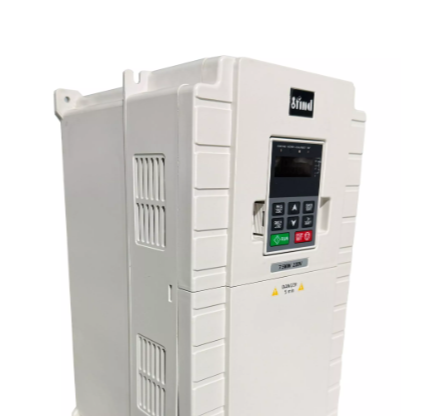
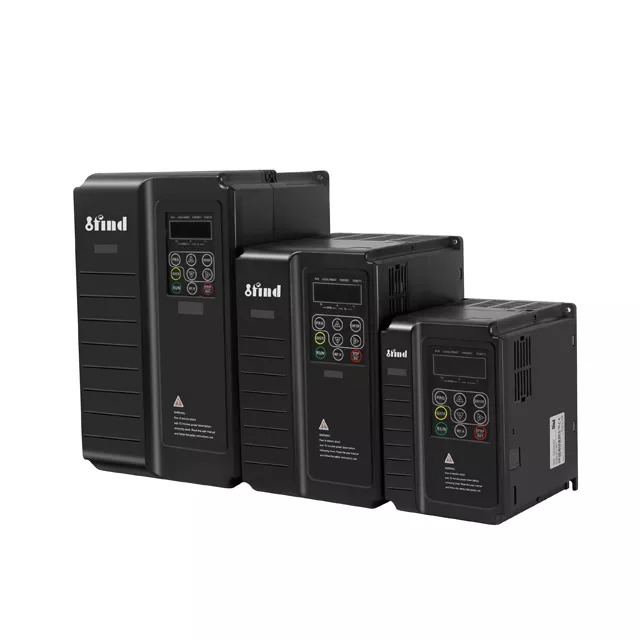
How many times do you judge an elevator’s quality by its door movement? Modern vertical transport depends on a high-performance Elevator Door Inverter. We will compare V/F and Vector control strategies. You will learn how these technical choices impact safety, speed, and passenger comfort.
Key Takeaways
●Technology Shift: Modern vertical transportation is moving from basic V/F control to high-precision vector algorithms for better performance.
●Precision Control: A Vector-based Elevator Door Inverter offers "servo-like" precision, ensuring smooth movement even at very low speeds.
●Enhanced Safety: Advanced drives provide superior obstacle detection by monitoring torque spikes, exceeding standard safety requirements.
●Environmental Adaptability: Vector control effectively compensates for external factors like high-rise wind pressure and mechanical friction.
●Increased Longevity: Using S-curve profiles and smooth transitions reduces mechanical stress on rollers and belts, lowering maintenance costs.
●Energy Efficiency: Choosing the right Elevator Door Inverter optimizes power consumption and prevents motor overheating during peak hours.
Technical Breakdown: V/F vs. Vector Control in Elevator Door Inverters
The heart of any modern door operator is its control algorithm. While both V/F and Vector control regulate motor speed, they achieve it through vastly different mathematical approaches.
Fundamental Principles of V/F Control
V/F control, or Voltage-to-Frequency ratio control, is the traditional method for driving AC motors. It maintains a constant ratio between the voltage and frequency supplied to the motor to keep the magnetic flux stable. In the context of an Elevator Door Inverter, this method is straightforward and cost-effective. However, it lacks "intelligence" regarding the motor's actual load. It assumes the motor follows the frequency command perfectly, which isn't always true when mechanical friction or wind pressure fluctuates.
The Mechanics of Vector (FOC) Control
Vector control, specifically Field-Oriented Control (FOC), represents the high-end spectrum of drive technology. Instead of treating the motor as a simple AC device, it uses complex mathematical models to decouple the stator current into two independent components: one for magnetic flux and one for torque. This allows the Elevator Door Inverter to control the motor with the precision of a DC servo motor.
Comparing Performance Metrics
The following table highlights the functional differences between these two methodologies:
Feature
V/F Control
Vector Control (FOC)
Speed Precision
Moderate (subject to slip)
High (precision within 0.01%)
Low-Speed Torque
Weak
Excellent (Full torque at 0Hz)
Dynamic Response
Slower
Instantaneous
Hardware Cost
Lower
Higher (Requires faster CPU)
Energy Efficiency
Standard
High (Optimized current usage)
Dynamic Response and Torque Capability
The most noticeable difference occurs during the "final inch" of door closure. Vector control allows the Elevator Door Inverter to maintain high torque even at near-zero speeds. This ensures the door closes firmly and quietly without stalling. In contrast, V/F drives often struggle at low frequencies, leading to jerky movements or inconsistent closing forces if the mechanical track is slightly dirty.
Encoder vs. Sensorless Vector
While some advanced inverters offer "sensorless" vector control by estimating motor position through current feedback, the highest-performing elevator doors typically use an encoder. This hardware feedback provides the drive with the exact position of the door panels, enabling millimeter-perfect positioning and superior safety sensing.
Note: High-traffic commercial buildings almost exclusively use Vector-controlled drives because they handle the continuous "open-close" cycles with significantly less motor heating.
Tip: When selecting an Elevator Door Inverter, verify if the hardware supports both asynchronous (IM) and synchronous (PMSM) motors to ensure future-proofing for your elevator fleet.
Optimizing the Door Speed Curve with an Elevator Door Inverter
A high-quality elevator ride is often judged by how the doors move. The Elevator Door Inverter uses an "S-Curve" profile to manage this motion. This profile replaces abrupt starts and stops with smooth, curvilinear acceleration and deceleration.
Vector control minimizes "jerk"—the rate of change of acceleration. By precisely controlling torque, it eliminates the micro-vibrations often felt in older V/F systems. Furthermore, it allows for sophisticated "Hold-Open Torque" settings. The drive can apply just enough current to keep the doors open against a spring or wind load without wasting energy or overheating the motor windings.
Overcoming Mechanical Resistance and Wind Pressure
One of the biggest headaches for building managers is the "Stack Effect" or wind pressure in high-rise buildings. This pressure acts as an invisible wall, preventing doors from closing properly and triggering elevator fault codes.
Active Torque Compensation
A Vector-based Elevator Door Inverter excels here. It constantly monitors the current required to move the door. If it senses an unexpected increase in resistance (like wind pressure or a slightly misaligned rail), it instantly boosts torque to maintain the commanded speed.
Adaptive Learning Features
Modern units feature an "Auto-Tune" or "Width Learning" mode. During commissioning, the inverter travels the full length of the door track, measuring the mass, friction points, and total distance. It then creates a customized power map for that specific door, ensuring consistent performance even as mechanical parts wear down over years of service.
Tip: Regularly utilize the drive's self-learning function during annual maintenance to compensate for natural mechanical wear and lubrication changes.
Enhancing Passenger Safety through Advanced Drive Intelligence
Safety is the non-negotiable priority in elevator design. Current international standards like EN 81-20/50 dictate strict limits on door closing force (usually not exceeding 150N).
Obstacle Detection Sensitivity
Because a Vector-controlled Elevator Door Inverter has a direct "line of sight" into the motor's torque production, it can detect an obstruction as small as 10mm. If a passenger’s hand or a small object blocks the door, the drive senses the minute spike in torque and reverses the motion instantly—often before the physical safety edge even touches the object.
Nudging and Silent Operation
In emergency scenarios, such as a fire alarm where doors must close slowly despite obstructions, "Nudging" functions provide a low-torque, pulsed closing signal. Additionally, the high switching frequency of modern inverters (often up to 16kHz) moves electromagnetic noise outside the range of human hearing, resulting in the "silent" operation expected in luxury hotels and office towers.
Note: Advanced obstacle detection through the drive's current loop acts as a critical secondary safety layer to the primary light curtains.
Installation and Commissioning: V/F Simplicity vs. Vector Precision
The choice between V/F and Vector often comes down to the complexity of the installation environment.
The Case for V/F
In low-traffic residential buildings with simple, lightweight doors, a V/F-based Elevator Door Inverter is often sufficient. They are "Plug-and-Play" devices requiring minimal parameter adjustment. If the door moves from point A to point B without much resistance, the simplicity of V/F can save on both initial costs and technician training.
The Necessity of Vector Commissioning
Vector drives require more initial setup, specifically "Motor Parameter Identification." The inverter needs to know the motor’s internal resistance and inductance to build its mathematical model. However, most modern controllers now automate this process. Once tuned, the settings can often be copied to other identical doors in the building using a simple copy-key or mobile app, ensuring a standardized "feel" across the entire elevator bank.
Tip: If you notice your doors "hunting" or oscillating slightly before reaching the fully closed position, it is likely a PID gain issue within the vector loop that needs adjustment.
Reliability and Maintenance: Reducing Downtime in High-Traffic Zones
Door failures are the leading cause of elevator service calls. An intelligent Elevator Door Inverter significantly extends the life of mechanical components. By providing smooth torque transitions, it reduces the shock loads on belts, rollers, and hangers.
Predictive Maintenance and Thermal Protection
Advanced inverters can log the number of cycles and monitor the average torque required for each move. If the torque consistently increases over a month, the drive can trigger a maintenance alert, signaling that the rails need lubrication or the rollers are wearing out. Furthermore, integrated thermal protection monitors the motor's temperature, automatically slowing down the door cycle during peak hours if the motor gets too hot, preventing a total system shutdown.
Note: Protecting the inverter PCB with conformal coating is vital for elevators located in humid or dusty environments to prevent short circuits.
Selection Guide: Choosing the Right Drive for Your Project
When specifying an Elevator Door Inverter, consider the following factors to ensure you choose the most efficient solution:
1. Traffic Volume: High-traffic offices and hospitals require Vector control for durability and speed.
2. Motor Type: If your system uses a Permanent Magnet Synchronous Motor (PMSM), you must use a drive specifically designed for synchronous vector control.
3. Physical Space: Modern compact drives are designed to fit directly on top of the door operator, saving valuable hoistway space.
4. Integration: Does the drive support the communication protocols (such as CANbus or Modbus) used by your main elevator controller?
Retrofit Considerations
Many older elevators still use AC-2 (two-speed) motors or basic V/F drives. Upgrading these to a modern Vector-based Elevator Door Inverter is one of the most cost-effective ways to improve a building's "quality of service" without replacing the entire elevator system. It immediately results in faster door times, less noise, and fewer entrapment calls.
Tip: For retrofits, look for inverters with wide voltage input ranges (e.g., 200V-240V) to handle the power fluctuations common in older buildings.
Conclusion
The shift to vector control in Elevator Door Inverter technology ensures superior precision and safety. While V/F suits simple tasks, vector algorithms handle wind pressure and mechanical wear effectively. By choosing ifind-inverter, building owners benefit from adaptive learning and high-torque performance. These advanced drives reduce maintenance costs and extend equipment life. Trusting high-quality solutions ensures a smoother, more reliable experience for every passenger.
FAQS
Q: Why use a Vector-based Elevator Door Inverter?
A: It offers superior torque and precision, allowing the Elevator Door Inverter to handle heavy wind loads easily.
Q: How does V/F control compare in simple systems?
A: V/F is cost-effective for residential use, but this Elevator Door Inverter type lacks advanced obstacle detection.
Q: Can an Elevator Door Inverter reduce maintenance?
A: Yes, the Elevator Door Inverter provides smooth S-curves, reducing mechanical wear on belts and rollers.
Q: What is the best Elevator Door Inverter for PMSM motors?
A: Vector control is essential for PMSM motors to ensure silent, high-efficiency door operation.