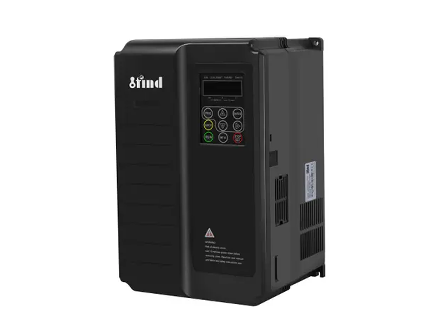
In the modern world of industrial automation, energy efficiency, and precision motor control, the Variable Frequency Drive (VFD) has become an indispensable component. Whether you are managing a factory, running an HVAC system, or involved in any application requiring motor control, understanding what a VFD is, how it works, and the differences between related terms like VSD (Variable Speed Drive) and inverter drive is crucial. We will break down these concepts in a way that is easy to understand, practical, and relevant for anyone looking to optimize their motor-driven systems.
What Is a Variable Frequency Drive (VFD)?
A Variable Frequency Drive (VFD), also known as a variable speed drive (VSD) or an inverter drive, is an electronic device that controls the speed of an electric motor by varying the frequency of the electrical power supplied to the motor. The key to understanding a VFD lies in recognizing that it adjusts the frequency (measured in hertz, Hz) of the electrical signal to control the speed of an electric motor.
In an alternating current (AC) motor, the speed is determined by the frequency of the power supplied. For example, in most countries, the standard frequency of AC power is 50 Hz or 60 Hz, and the motor will run at a constant speed based on this frequency. However, if you need to vary the motor speed (for applications like fans, pumps, conveyors, etc.), a VFD allows you to change that frequency and thus the motor speed.
Key Components of a VFD:
1. Rectifier: Converts the incoming AC voltage into DC voltage.
2. DC Link: Smoothens the DC voltage obtained from the rectifier and stores it temporarily.
3. Inverter: Converts the DC voltage back into a variable-frequency AC output, which is fed to the motor.
By controlling the frequency and voltage supplied to the motor, VFDs provide precise motor speed control, enhanced energy efficiency, and greater operational flexibility.
What Are the Benefits of Using a VFD?
VFDs offer numerous benefits, making them a preferred choice in various industries and applications:
1. Energy Efficiency: By adjusting the speed of the motor based on demand, VFDs can significantly reduce energy consumption, especially in applications where the motor doesn't need to run at full speed all the time.
2. Cost Savings: Reduced energy usage directly leads to lower electricity bills, and VFDs also help extend the lifespan of motors by reducing wear and tear.
3. Improved Process Control: VFDs allow for smooth, precise control over motor speed, which is essential for applications that require variable speeds, such as pumps, conveyors, and HVAC systems.
4. Reduced Mechanical Stress: Since the motor speed is adjusted gradually, the system experiences less mechanical stress, leading to fewer breakdowns and lower maintenance costs.
5. Soft Start and Stop: VFDs eliminate the need for hard starts and stops, providing a smooth transition that minimizes the impact on the mechanical parts of the system.
What Is the Difference Between a VSD and a VFD?
The terms VSD (Variable Speed Drive) and VFD (Variable Frequency Drive) are often used interchangeably, but technically, they are not exactly the same.
1. VSD (Variable Speed Drive):
A VSD is a broader term that refers to any device used to control the speed of an electric motor. While the VFD is a type of VSD, other types of variable speed drives include:
· DC Drives: These use direct current to control the motor speed.
· Mechanical Drives: These use mechanical components, such as gears, pulleys, or belts, to adjust the motor's speed.
· Hydraulic or Pneumatic Drives: These use fluid-based systems to adjust speed.
Therefore, while all VFDs are VSDs, not all VSDs are VFDs. The term VSD can be applied to any technology or mechanism that controls motor speed, whereas VFD specifically refers to the electronic device that controls the speed of an AC motor through frequency adjustment.
2. VFD (Variable Frequency Drive):
As mentioned earlier, a VFD is a specific type of VSD that uses electronic circuits to vary the frequency of the electrical supply to an AC motor. VFDs are often used in industries and applications where speed control and energy efficiency are crucial. In essence, while a VSD can refer to any method of controlling motor speed, a VFD is specifically related to AC motors and uses frequency modulation.
In summary, VFD is a subset of VSD, but VSD can refer to a broader range of speed control methods, including mechanical or fluid-based methods, while VFDs are solely concerned with controlling AC motor speed using electrical frequency changes.
What Is the Difference Between VFD and Inverter Drive?
Now, you might be wondering how the terms VFD and Inverter Drive relate to each other. Although these terms are sometimes used interchangeably, there are distinctions worth noting.
1. VFD (Variable Frequency Drive):
A VFD is an electronic device used to control the speed of an electric motor by varying the frequency of the AC power supplied to the motor. As discussed earlier, VFDs are widely used to enhance energy efficiency and provide precise speed control.
2. Inverter Drive:
An Inverter Drive, or simply Inverter, is essentially the core component of a VFD. It refers to the part of the system that converts DC voltage (obtained from the rectifier) into a variable-frequency AC output. Inverter drives can be part of a larger system like a VFD, but they can also be used in other applications, such as in renewable energy systems (solar or wind energy) or uninterruptible power supplies (UPS).
So, the difference between VFD and inverter drive is mainly semantic and functional. While VFD refers to the entire system that controls the motor speed, an inverter drive refers specifically to the part of the system that generates the variable-frequency output.
How Does a VFD Work?
A Variable Frequency Drive (VFD) controls the speed of an electric motor by adjusting the frequency and voltage of the power supplied to it. This process involves four key stages: rectification, filtration, inversion, and speed control. Here’s a detailed breakdown of how each stage works:
Rectification – Converting AC to DC
The first stage involves a rectifier (or converter), typically a six-pulse diode bridge. This component converts the incoming three-phase alternating current (AC) into direct current (DC).
How it works:
The rectifier contains six diodes arranged to allow current flow only when the anode voltage exceeds the cathode voltage.
At any given moment, only two diodes conduct—one from the positive half-cycle and one from the negative half-cycle of the AC waveform.
This selective conduction rectifies the AC into a pulsating DC output, known as "ripple DC."
Filtration – Smoothing the DC Output
The ripple DC then passes through a DC bus filter, which smooths the waveform to create stable DC voltage.
Inversion – Converting DC Back to Adjustable AC
The smoothed DC is fed into an inverter, which uses Insulated Gate Bipolar Transistors (IGBTs) to convert DC into a controllable three-phase AC output.
Key steps:
Switching action: IGBTs act as high-speed switches, turning on/off thousands of times per second in specific pairs (e.g., Phase 1 to 2, Phase 2 to 3).
Pulse Width Modulation (PWM): By varying the duration and timing of IGBT switching, the inverter generates a stepped waveform that approximates a sine wave.
Output adjustment: The PWM-controlled output mimics AC suitable for driving motors while allowing adjustments to voltage and frequency.
Speed Control – Adjusting Motor RPM
The final stage regulates motor speed by altering the frequency of the inverted AC.
Principle:
Motor speed (RPM) is proportional to the AC frequency, as defined by:
Speed (RPM)=120×Frequency (Hz)Number of Motor PolesSpeed (RPM)=Number of Motor Poles120×Frequency (Hz)
How VFDs adjust speed:
Increasing the frequency raises motor speed.
Decreasing the frequency lowers motor speed.
The VFD dynamically adjusts the IGBT switching pattern to vary the output frequency, enabling precise control over motor performance.
Applications of VFDs
VFDs are used in a wide range of applications across different industries, including:
1. HVAC Systems: VFDs are used in air conditioning, heating, and ventilation systems to control the speed of fans and pumps, optimizing energy use and maintaining desired environmental conditions.
2. Pumps: VFDs control the speed of pumps in various applications like water treatment, industrial processes, and irrigation. They allow for efficient flow control based on demand.
3. Conveyors: VFDs provide precise speed control for conveyor belts in manufacturing plants, helping to regulate the flow of materials and optimize production lines.
4. Cranes and Hoists: VFDs allow for smooth operation and precise control of lifting equipment, reducing mechanical stress and improving safety.
5. Industrial Machinery: VFDs are used to control the speed of motors in CNC machines, extruders, mixers, and other precision equipment, enhancing performance and productivity.
Conclusion
Variable Frequency Drives (VFDs) are essential components in modern motor control systems. By varying the frequency of the electrical power supplied to a motor, VFDs enable precise speed control, improved energy efficiency, and extended equipment life. While VSD (Variable Speed Drive) is a broader term that includes various methods of controlling motor speed, VFD specifically refers to the electronic devices that control AC motor speed by modulating frequency.
The terms VFD and Inverter Drive are closely related, with an inverter being a key component of a VFD system. VFDs are commonly used in industries that require variable speed motor operation, such as HVAC, pumps, conveyors, and industrial machinery.
If you're looking to integrate VFDs into your systems or need more information on how they can enhance your energy efficiency and operational control, Jiaxing IFIND Electromechanical Device Co., Ltd. offers top-quality VFD solutions. Visit IFIND's official website to explore their range of products and find the right solution for your motor control needs.


