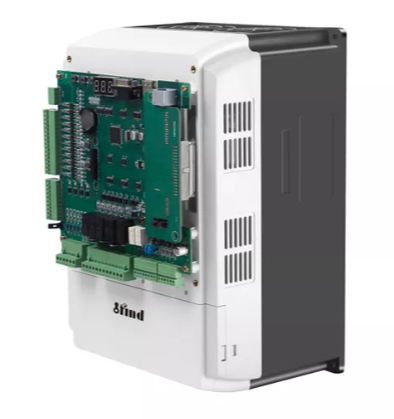
Are you confusing the "brain" and "muscle" of your elevator? While they work together, the Elevator Door Inverter and the door operator serve vastly different purposes. This guide clarifies their specific roles. You will learn to diagnose faults accurately and optimize passenger safety and efficiency.
Key Takeaways
●Brain vs. Muscle: The Elevator Door Inverter serves as the digital intelligence that controls motion, while the door operator acts as the physical mechanical assembly.
●VVVF Efficiency: ModernElevator Door Inverter technology utilizes Variable Voltage Variable Frequency to ensure smooth, energy-efficient, and "soft" door transitions.
●Precision Control: Unlike simple mechanical systems, an Elevator Door Inverter allows for programmable speed curves and torque limits to protect hardware.
●Diagnostic Speed: Identifying issues is faster when you distinguish between electronic error codes on the inverter and physical wear on the operator.
●Smart Modernization: Upgrading to a high-performance Elevator Door Inverter from specialists can extend the lifespan of existing mechanical operators.
The Core Distinction: Defining the Roles in Door Automation
Understanding the fundamental difference between these two components is essential for any technical procurement or maintenance strategy. Think of the Elevator Door Inverter as the electronic controller and the door operator as the mechanical assembly that physically moves the heavy doors.
In modern Variable Voltage Variable Frequency (VVVF) systems, the inverter acts as the intelligence layer. It interprets commands from the main elevator controller and translates them into precise electrical frequencies. The door operator, conversely, is the execution layer. It consists of the motor, belts, and tracks that carry out the physical opening and closing motions.
System synergy is the hallmark of modern installations. An operator cannot function without the controlled power of an inverter, and an inverter has nothing to drive without the mechanical operator. Together, they create a seamless transition for passengers, ensuring doors don't slam or lag.
Note: Modern VVVF technology allows for infinitesimal adjustments in door speed, which significantly reduces mechanical wear compared to old-fashioned limit-switch systems.
Detailed Comparison: Elevator Door Inverter vs. Door Operator
When we look at the hardware vs. software divide, the differences become stark. The door operator is a heavy-duty mechanical structure featuring hangers, rollers, and motors. The Elevator Door Inverter is a compact electronic device housed in a plastic or metal casing, filled with microprocessors and power transistors.
Feature
Elevator Door Inverter
Door Operator
Primary Function
Speed and torque regulation (Intelligence)
Physical door movement (Execution)
Component Type
Electronic / Digital
Mechanical / Electromechanical
Common Failure
Blown capacitors, software bugs
Worn rollers, snapped belts
Adjustment Method
Programming parameters
Tool-based physical alignment
Energy Impact
High (determines power draw)
Moderate (efficiency based on friction)
Control precision is where the Elevator Door Inverter truly shines. While a mechanical operator is limited by its physical gear ratios, the inverter uses digital speed curves to slow the door down just before it hits the frame. This "soft start and stop" protects the mechanical hardware from damage.
Maintenance requirements also differ. Technicians troubleshooting an inverter look for error codes or use multimeters to check voltage. When dealing with the operator, they check for physical obstructions, lubricate rails, and tighten belts. From a cost perspective, replacing an inverter is often cheaper than a full mechanical overhaul, though the electronic parts require specialized technical knowledge to configure.
Note: If your elevator doors are making a loud banging noise when closing, the issue is likely a misconfigured speed curve in the inverter rather than a mechanical failure in the operator.
Anatomy of an Elevator Door Inverter: The Intelligence Layer
The Elevator Door Inverter is the heart of high-performance door systems. It utilizes VVVF (Variable Voltage Variable Frequency) technology to modulate the power sent to the motor. By varying the frequency, the inverter controls the motor's speed; by varying the voltage, it controls the torque.
A critical phase in the life of an inverter is the "learning run." During this process, the Elevator Door Inverter measures the total width of the door opening and the force required to move it. It then saves these parameters to its internal memory. If these settings are lost, the door may fail to open fully or travel at dangerous speeds.
Compatibility is another major factor. Purchasers must ensure the inverter matches the motor type. For instance, a synchronous motor requires a specific drive algorithm compared to a standard asynchronous induction motor. High-quality drives, like those found in the iFind series, offer universal compatibility modes to handle various motor profiles.
Note: Most modern inverters include an LED display that provides real-time diagnostic codes, which can cut troubleshooting time by up to 70%.
Anatomy of a Door Operator: The Mechanical Execution
The door operator is the visible part of the system that does the heavy lifting. It includes the motor (usually a small AC or DC motor), the drive belt (often reinforced with steel or fiber), and the hangers that support the weight of the car doors.
The most complex part of the operator is the physical link—the "clutch" or "vane." This device extends when the car reaches a floor, "grabbing" the landing door so both open simultaneously. If this mechanical link is misaligned, the elevator might get stuck or the doors might rattle during travel.
Safety isn't just digital. Mechanical safety features like gravity-close weights ensure that if power fails, the doors will naturally tend to close (or stay closed) rather than swinging freely. However, these parts are prone to wear and tear. Worn rollers are the leading cause of "noisy doors," while loose belts can cause the door to slip, triggering an error in the inverter.
Note: Regularly cleaning the door tracks of debris is the simplest way to extend the life of both your door operator and your inverter.
Critical Integration: How They Work Together
The relationship between these two components is a continuous loop of communication. It starts when the main elevator controller sends a "Door Open" signal. The Elevator Door Inverter receives this signal, calculates the necessary power curve, and begins spinning the operator's motor.
As the motor spins, an encoder—usually attached to the operator—sends pulses back to the Elevator Door Inverter. These pulses tell the inverter exactly where the door is located. This feedback system allows the inverter to slow the door down precisely as it reaches the end of its travel.
Modern systems also feature a "nudging" mode. If a passenger blocks the doors for too long, the inverter reduces the motor's torque to a safe level and emits a warning sound, allowing the door to slowly close despite the obstruction. This requires perfect coordination between the electronic force limits and the mechanical friction of the operator.
Troubleshooting: Is the Issue the Inverter or the Operator?
When an elevator door fails, the first step is determining which component has faulted. Electronic faults in the Elevator Door Inverter often manifest as a complete lack of movement, erratic speeds, or the display of error codes like "Over-current" or "Undervoltage." If the screen on the inverter is blank, the power supply or the drive itself has likely failed.
Mechanical obstructions in the operator are usually easier to hear. Grinding, squealing, or jerky movements typically point to a physical issue. If the motor is humming but the door isn't moving, the belt may have snapped or the door might be off its track.
Technicians use a "reset" protocol to narrow down the culprit. They will power-cycle the inverter to see if it clears a software glitch. If the problem persists, they may decouple the motor from the door and move the door by hand. If the door moves smoothly manually, the problem lies in the motor or the Elevator Door Inverter.
Note: Keep a digital backup of your inverter's parameter list. If a drive fails, you can program the new one in minutes instead of performing a manual setup from scratch.
Upgrading and Modernization: When to Replace What
Modernizing an elevator doesn't always require a full replacement. In many cases, replacing an old, inefficient door drive with a modern Elevator Door Inverter can transform the performance of the entire lift. New inverters offer better safety features, smoother motion, and higher energy efficiency.
However, if the mechanical tracks are pitted or the operator frame is rusted, a complete operator overhaul is necessary. Replacing just the inverter in a worn-out mechanical system is like putting a supercar engine in a rusted frame—it won't perform well and will likely cause premature failure of the new electronics.
Universal Elevator Door Inverter units are now available that can interface with almost any existing operator. This is a massive advantage for B2B operators who manage diverse portfolios of elevator brands. Upgrading these components provides a high ROI by significantly reducing "nuisance" call-outs and improving the building's overall reputation for reliability.
Conclusion
The Elevator Door Inverter provides intelligence while the door operator provides physical force. Distinguishing between this "brain" and "body" allows for faster repairs and smarter upgrades. By choosing high-quality solutions from ifind-inverter, you gain access to advanced VVVF technology that ensures smooth and energy-efficient performance. Maintaining mechanical integrity alongside these reliable drives guarantees a safe experience for every passenger in your building.
FAQS
Q: What is the main role of an Elevator Door Inverter?
A: It acts as the system's brain, using VVVF technology to regulate the motor's speed and torque.
Q: How does the operator differ from the Elevator Door Inverter?
A: The operator is the mechanical "muscle" that physically moves doors, while the inverter provides the electronic control.
Q: Why should I upgrade to a modern Elevator Door Inverter?
A: Upgrading improves energy efficiency, reduces mechanical wear, and ensures much smoother door transitions for passengers.
Q: Can a faulty Elevator Door Inverter cause door noise?
A: Yes, incorrect speed parameters in the inverter often cause slamming, even if the mechanical operator is healthy.