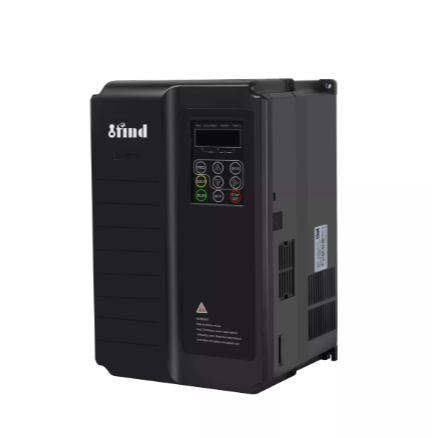
Did you know door cycles account for a huge portion of elevator travel time? An Elevator Door Controller Inverter acts as the system's "brain" to ensure smooth, rapid transitions. This article explores how these high-performance units boost safety and total building throughput.
Key Takeaways
●Optimized Transit Speed: An Elevator Door Controller Inverter minimizes passenger waiting time by accelerating door opening cycles and reducing the wasted seconds of each trip.
●Intelligent Safety Logic: High-performance controllers utilize current sensing and infrared technology to detect obstructions, ensuring safe reversals without passenger injury.
●Reduced Maintenance Costs: Advanced inverters eliminate mechanical "jerks" and soft-start shocks, which significantly extends the lifespan of belts, hangers, and motors.
●Enhanced Energy Efficiency: Modern systems feature power modulation and standby modes, optimizing energy consumption based on real-time passenger flow and building traffic.
●Smart Building Integration: These controllers coordinate with main dispatch systems to provide customized performance for commercial, medical, and residential environments.
The Core Mechanics: How an Elevator Door Controller Inverter Optimizes Performance
An Elevator Door Controller Inverter functions by converting standard electrical input into variable frequency and voltage output. It manages the motor’s speed and torque with extreme precision through variable frequency control. This allows for fluid, non-abrupt movements that eliminate the jarring starts typical of older, contactor-based systems.
To handle heavy doors, these inverters use torque compensation at low speeds. They ensure the motor provides enough power to move heavy glass or metal panels without mechanical struggling or hesitation. Closed-loop feedback systems utilize real-time data from encoders, allowing the Elevator Door Controller Inverter to adjust for external factors like wind resistance in elevator shafts or physical mechanical wear over time.
The movement profile follows an "S-Curve" acceleration and deceleration pattern. It eliminates "slamming" at the end of the cycle by gently tapering the speed as the door reaches its limit. Furthermore, integrated voltage regulation protects the door motor from power surges, ensuring consistent opening torque even during minor fluctuations in the building’s power grid.
Note:Modern inverters use advanced microprocessors to respond to passenger signals in milliseconds, significantly reducing door reaction lag.
Precise control logic serves as the core guarantee for both elevator safety and operational efficiency in high-density urban environments.
Precision Speed Control: Reducing Wait Times Without Sacrificing Safety
In high-rise buildings, every second spent waiting for a door impacts productivity and passenger satisfaction. A high-performance Elevator Door Controller Inverter optimizes opening cycles by achieving faster peak speeds during the middle of the stroke. This reduces the wasted time where the door is neither fully closed nor wide enough for entry.
The impact on "floor-to-floor" time is measurable. Saving just 1.5 seconds per stop can significantly increase the total carrying capacity of an elevator bank during peak morning rushes. Smooth approach logic ensures that while the door moves fast, it slows down gently to prevent mechanical bounce or noise.
Building managers can use customizable profile settings to tailor speed curves. They can adjust parameters based on specific door weights or architectural requirements, such as requiring slower movements for heavy fire-rated doors or faster cycles for high-traffic office lobbies.
Feature
Performance Benefit
Efficiency Impact
Faster Peak Speed
Reduces mid-cycle travel time
Higher passenger throughput
S-Curve Profiling
Eliminates mechanical bounce
Lower maintenance downtime
Custom Torque
Handles varied door weights
Versatility across building types
Advanced Safety Features Powered by Inverter Intelligence
Safety is the fundamental requirement for any elevator system. High-performance inverters feature intelligent obstruction detection. They sense minute current spikes in the motor—often before a physical "hit" occurs—to detect blockages in the doorway.
These units integrate seamlessly with light curtains and infrared sensors. When an object breaks the light beam, the inverter coordinates the electronic signals for an immediate, soft reversal. Anti-pinch sensitive logic allows technicians to adjust the "closing force" limit to meet strict international safety standards, ensuring the door never exceeds a safe pressure threshold.
In emergency scenarios, the Elevator Door Controller Inverter offers specialized response modes. It ensures doors remain operational or transition to a fail-safe state during power dips or system anomalies, preventing passengers from being trapped between floors or experiencing scheduling delays caused by misoperation.
Note:Regularly test the obstruction detection sensitivity to ensure the inverter responds correctly to minimal resistance without causing false reversals.
Coordinate inverter settings with the building's fire alarm system for automated emergency door protocols that prioritize passenger egress.
Enhancing Durability through Reduced Mechanical Stress
Traditional "On/Off" door controllers create significant mechanical stress by applying full power instantly. An Elevator Door Controller Inverter eliminates these soft-start shocks. It prevents the "jerk" that causes belts to stretch and hangers to vibrate loose over time.
By managing kinetic energy effectively, the inverter mitigates daily wear and tear. It absorbs the energy during deceleration rather than letting the door hit a physical stop. Frequency modulation also suppresses vibrations that can cause noisy operation or mechanical resonance within the elevator car frame.
Modern units include self-diagnostic capabilities. They monitor motor health and cycle counts in real time. This data allows property managers to predict maintenance needs based on actual usage rather than arbitrary schedules, significantly reducing the risk of unexpected failures.
Energy Efficiency and Operational Cost Savings
Energy consumption is a major concern for modern property management. Compared to traditional contactors, an Elevator Door Controller Inverter optimizes power usage through efficient modulation. It only draws the exact amount of current needed for the specific door weight and speed.
Modern inverters feature standby power management. When the elevator is idle, the inverter enters a low-power mode, reducing the energy drain common in large buildings. Improved heat dissipation within the inverter housing leads to a longer lifespan for all electronic components and reduces the cooling load required for the elevator machine room.
Advanced systems can even explore regenerative braking potential. While the door decelerates, the motor acts as a generator. Though the energy produced is small for a single door, across a fleet of elevators in a skyscraper, these savings become substantial over a fiscal year.
Smart Integration: The Inverter in the IoT Elevator Era
The Elevator Door Controller Inverter is no longer an isolated component; it is an integrated part of the building's IoT ecosystem. It communicates constantly with the main controller, sharing status data and error codes to optimize the entire dispatching system.
During morning and evening rushes, the system can trigger traffic-based adaptation. It automatically switches to "Peak Mode," where the inverter prioritizes speed and immediate response to clear lobby congestion faster. Conversely, "Night Mode" can be activated to reduce door frequency and conserve energy during low-traffic hours.
Remote monitoring and cloud connectivity allow off-site building managers to track performance. They can see real-time door cycle speeds and detect anomalies before a tenant files a complaint. Furthermore, firmware upgradability means that door performance can be improved over time via software tweaks, ensuring the hardware stays relevant for years.
Tip:Deep integration with dispatch systems reduces the number of elevators operating without passengers, optimizing overall transport efficiency.
Note:Use cloud-based analytics to identify which elevator doors are cycling the most to prioritize them for lubrication and proactive belt inspection.
Application Scenarios: From Medical Urgency to High-Rise Luxury
Different environments demand different door behaviors. In high-traffic commercial complexes, the priority is managing thousands of cycles daily with consistent speed and zero downtime. The inverter ensures the doors open and close reliably under constant pressure.
Medical and healthcare facilities have extremely high requirements for emergency transport. Here, the Elevator Door Controller Inverter ensures fast, safe opening for stretchers and emergency teams, shortening ambulance transport times. Reliability is the highest priority in these critical environments.
In residential high-rises, the focus shifts to passenger experience. Residents want quiet, smooth operation that doesn't vibrate through the walls of adjacent apartments. Industrial environments, meanwhile, use high-torque inverter settings to handle massive, heavy-duty freight doors that would burn out standard motors.
Application
Primary Need
Inverter Solution
Commercial Office
High Throughput
Rapid peak speeds
Hospital
Emergency Speed
High-priority response
Luxury Residential
Quiet Operation
Vibration suppression
Industrial / Cargo
High Torque
Heavy door handling
Conclusion
The Elevator Door Controller Inverter is a vital catalyst for modern performance. It bridges the gap between basic movement and high-tier efficiency through precision control and energy savings. Choosing ifind-inverter ensures a future-proof, reliable system for any building. Our advanced solutions offer superior safety intelligence and customized performance for diverse application scenarios.
FAQS
Q: How does an Elevator Door Controller Inverter reduce wait times?
A: It optimizes opening cycles by achieving faster peak speeds through variable frequency control.
Q: Why use an Elevator Door Controller Inverter for safety?
A: It provides intelligent obstruction detection by sensing current spikes to prevent passengers from being trapped.
Q: How does an Elevator Door Controller Inverter improve durability?
A: It eliminates soft-start shocks and mechanical jarring, extending the life of belts and hangers.
Q: What is the benefit of an Elevator Door Controller Inverter in peak mode?
A: It adjusts speed strategies to manage heavy passenger flow efficiently during morning or evening rushes.