


Elevator Inverters Designed Around Lift Performance
An elevator inverter, also known as an elevator VFD or lift drive inverter, changes the voltage and frequency supplied to the motor. Instead of allowing the motor to start and stop abruptly, the drive controls each stage of motion according to the elevator operating command.
This controlled movement helps reduce sudden changes in speed and creates a more comfortable transition between starting, normal travel and floor arrival. Accurate torque and speed regulation can also support stable operation when passenger load, travel direction or site conditions change.
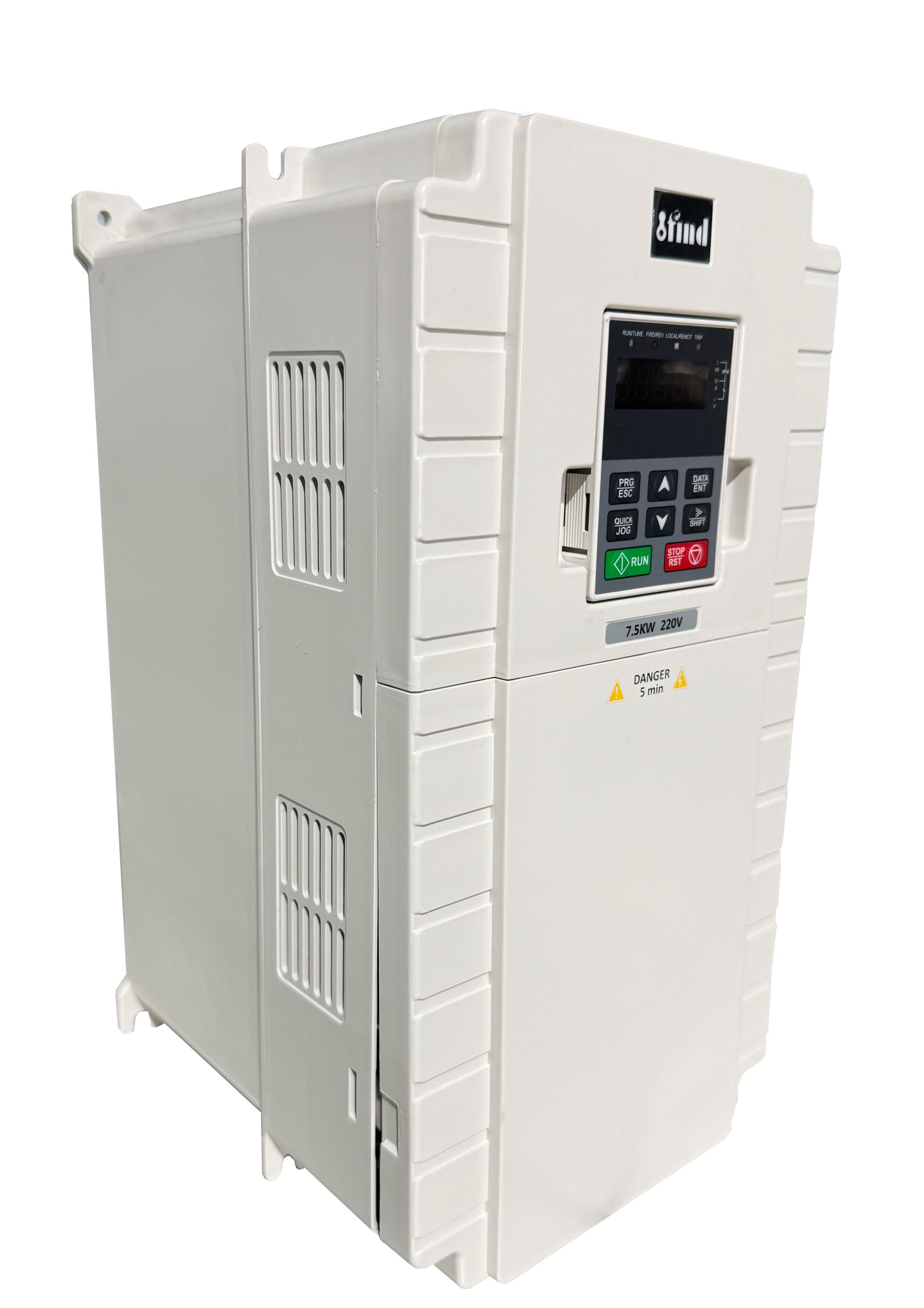
IFIND develops elevator inverter solutions for passenger and cargo applications, with control options designed around different motor types, feedback requirements and control cabinet configurations.
OEM Elevator Inverter Support for B2B Projects
Application
review
The project team provides motor information, control mode, site power conditions, elevator application and required quantity.
Configuration recommendation
IFIND reviews the control structure and recommends an appropriate open-loop or closed-loop solution.
OEM and application design
Product configuration, application functions and project-specific requirements are discussed before production.
Testing and technical support
Products are assembled and tested before packing, with technical communication available for setup and application questions.
Elevator Inverter Applications
IFIND elevator frequency inverter solutions can be considered for new lift systems, control cabinet production and modernization projects. The final control configuration is selected according to the motor, feedback system, building type and operating requirements.

Residential Passenger Elevators
Residential lifts require comfortable starts, controlled stopping and stable daily operation. An appropriately configured passenger elevator inverter helps reduce abrupt motion and supports accurate floor arrival in apartment buildings and residential developments.
Commercial and Public Building Elevators
Office buildings, shopping facilities and other public spaces may experience frequent starts and changing passenger loads. Variable-speed motor control helps maintain consistent elevator movement under different operating conditions.


Cargo and Freight Elevators
Cargo lifts require stable torque and controlled movement while carrying changing loads. Open-loop or closed-loop control can be selected according to the motor, load characteristics and required positioning accuracy.
Hospital and Special-Purpose Elevators
Hospital lifts and other special-purpose elevator systems often place increased emphasis on smooth motion and controlled stopping. The inverter configuration can be reviewed according to the elevator controller, motor and project-specific operating requirements.

Why Choose IFIND as Your Elevator Inverter Supplier?
In-House Production Capability
IFIND operates its own SMT facilities for main and driver board production. In-house manufacturing supports closer coordination between hardware production, assembly, testing and application engineering.
Quality Management and Product Testing
The company has established a quality management system and lists ISO 9001, CE and BV field certification among its quality credentials. Products are assembled and tested before packing and shipment.
OEM and Special Application Design
OEM cooperation and special design services are available for projects with different motor systems, control requirements or local application conditions. This allows buyers to discuss a practical configuration instead of relying only on a generic inverter.
Overseas Service and Technical Communication
IFIND works with sales and service networks in multiple international markets. Engineers provide training and service support, while one-to-one communication is available for product selection, parameter setup and application troubleshooting.

How to Select the Right Elevator Inverter
Selecting an elevator inverter should begin with the complete lift system rather than only the inverter power rating. Providing accurate project information helps reduce configuration changes during installation and commissioning.
Before requesting a quotation, confirm the following:
Motor and feedback information: Identify whether the system uses an asynchronous motor or permanent magnet synchronous motor and whether encoder feedback is required.
Control architecture: Confirm whether the application requires open-loop, sensorless vector or closed-loop vector control.
Elevator operating requirements: Provide the lift type, expected operating characteristics, controller signals and ride-quality requirements.
Site and project conditions: Share the power supply conditions, installation environment, required quantity, destination market and any OEM requirements.
IFIND engineers can use this information to review the application and recommend a suitable elevator drive direction.
Open-Loop and Closed-Loop Elevator Inverter Options
The right control architecture depends on the elevator motor, feedback system, ride-quality target and installation requirements. IFIND provides several control directions rather than applying one standard configuration to every lift project.
Open-Loop Elevator Inverter
An open-loop elevator inverter controls motor speed and torque without relying on encoder feedback. It can simplify the system structure while providing variable-speed control for suitable passenger lift, cargo lift and other elevator applications.
Open-loop control may be considered where the project requires straightforward commissioning, a practical control structure and compatibility with the selected motor and elevator controller.
Closed-Loop Elevator Inverter
A closed-loop elevator inverter receives motor feedback through an encoder or PG interface. This feedback allows the drive to make more precise adjustments to motor speed and torque during starting, travel and stopping.
Available closed-loop configurations support elevator-specific functions such as startup pre-torque compensation, speed deviation detection, brake contactor control and multiple encoder interfaces. They are suitable for projects requiring higher control accuracy and more refined ride performance.
Inverters for Asynchronous Elevator Motors
Inverters for Permanent Magnet Synchronous Motors
Related Product




FAQs
Contact Us
Choosing the correct lift inverter can simplify commissioning, improve ride performance and support reliable long-term operation. Tell us about your motor type, control architecture, site power conditions, elevator application and required quantity.
Related Blogs
-
 Elevator rollback at start is one of the most common ride comfort and commissioning problems in modern lift systems. It usually happens in the short moment when the mechanical brake releases and the motor has not yet produced enough holding torque to support the car and counterweight balance. Passen
 -
 Have you ever wondered how elevators maintain a smooth and comfortable ride, even during rapid stops and starts? The secret lies in a crucial component called the Elevator Inverter.In this article, we will explore how elevator inverters control motor speed, enhance safety.
 -
 Elevator inverters play a crucial role in the efficient operation of modern elevator systems. As vertical transportation solutions evolve, the importance of optimizing energy consumption, improving ride quality, and ensuring safety becomes more pronounced. Elevator inverters control the elevator driGlossary


