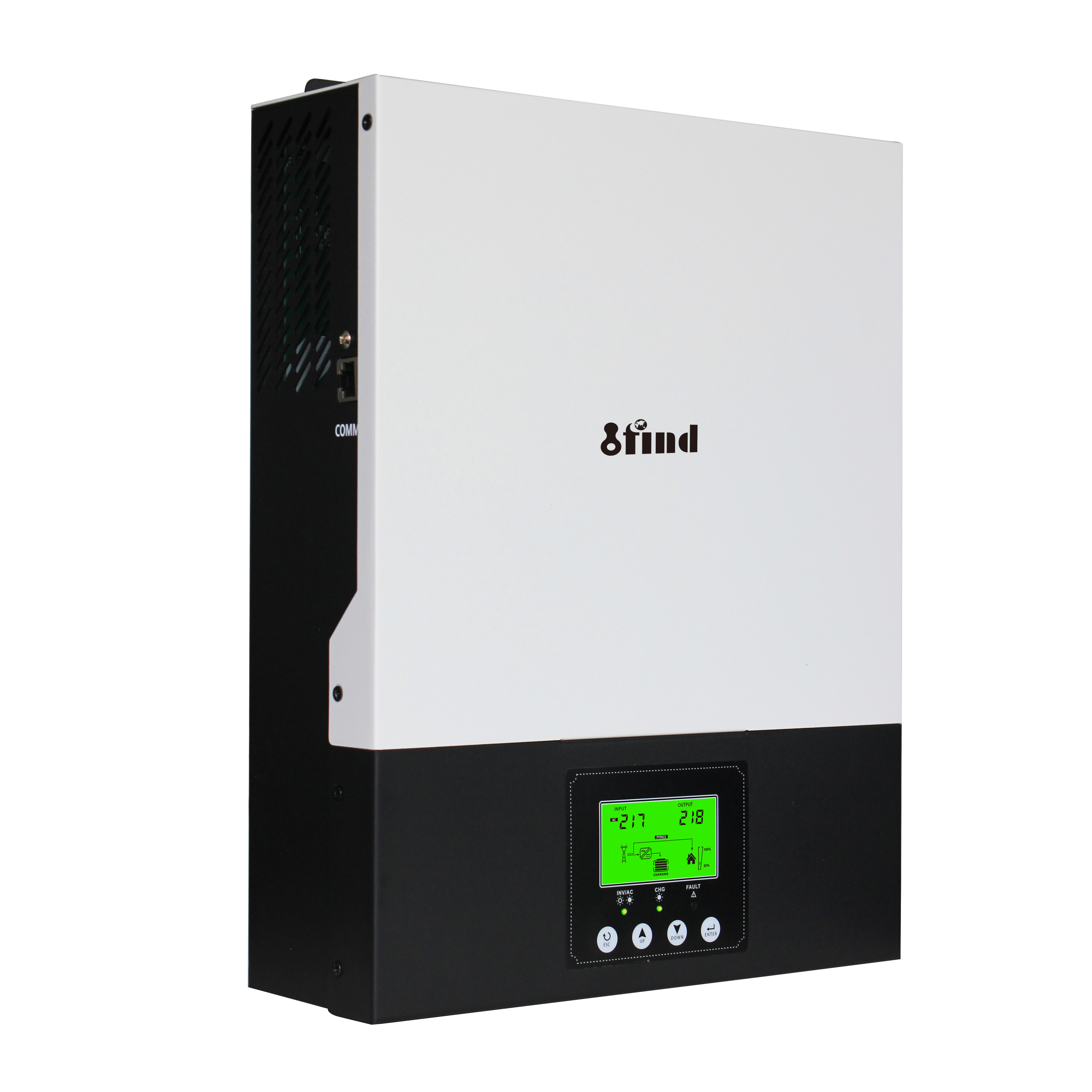
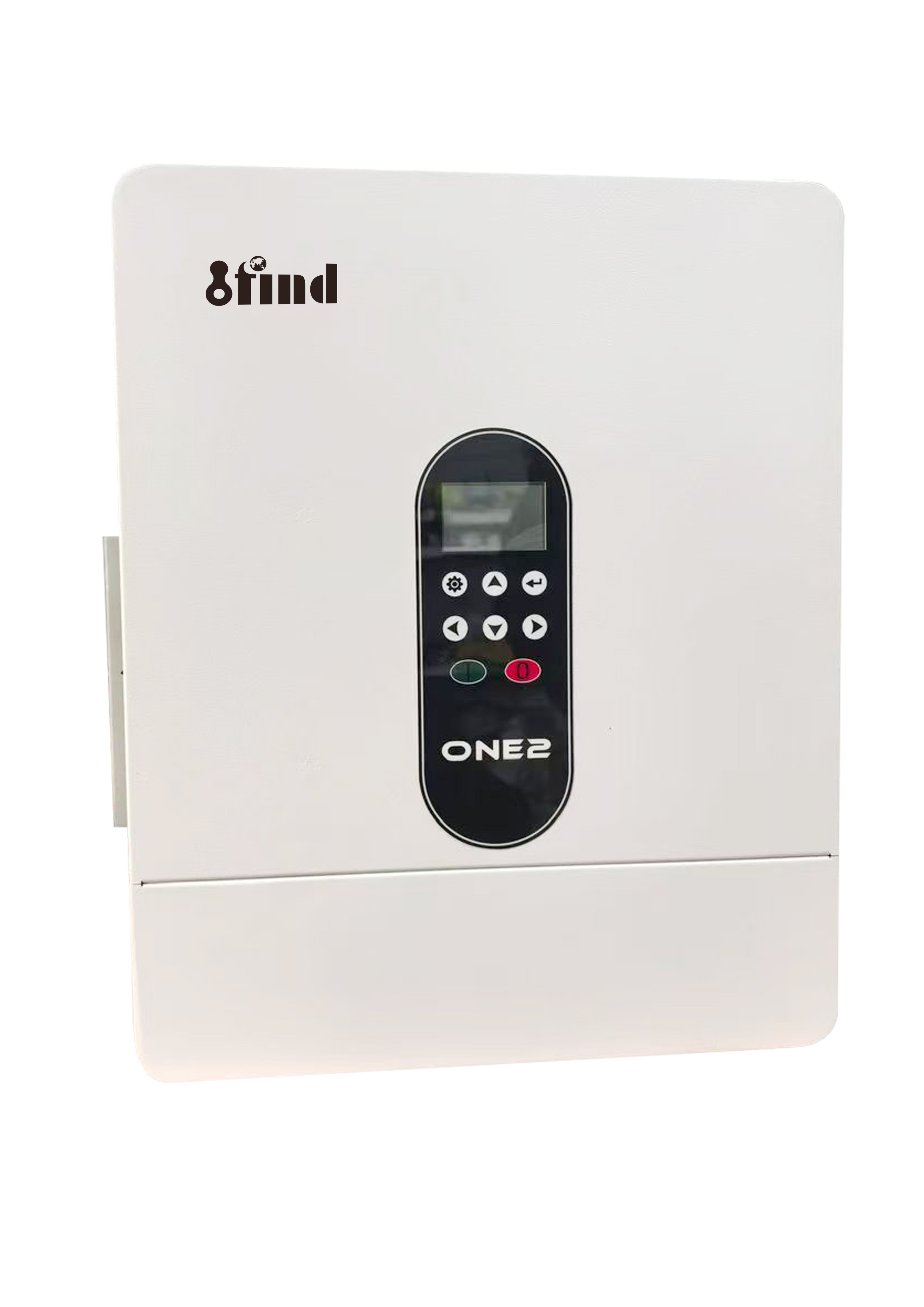
3-in-1 MPPT Hybrid Solar Inverter with Battery-Free Operation
The IFIND 3-in-1 MPPT Hybrid Solar Inverter combines a power inverter, MPPT solar controller and grid charger in one compact unit. It can power daytime loads directly from PV without a battery, while still supporting lead-acid or lithium storage when backup is required. Pure sine wave output, flexible source priority, communication options and multiple protection functions make it suitable for home systems and properly matched pump loads.
Main Features Of Without Battery All in One MPPT off Grid Hybrid Solar vfd for Home and pump Solar inverter
High Frequency off grid hybrid solar inverter all in one inverter
3 in 1 design, Power Inverter + MPPT controller + Grid Charger
Working without battery during daytime
Support lithium activation wake-up and cold start function
Auto restart while AC is recovering
Intelligent power supply mode, intelligent Distribution of solar panel/mains/battery power shares
AC and PV charge voltage adjustable, can meet different types battery charge requirement
Adjustable Charge Current & Voltage, selectable Lead acid / Lithium battery
Solar, Grid and Battery Energy complement each other, priority selectable
RS232, BMS/RS485, Dry Contact Communication
WiFi Plug or GPRS option for Mobile App, Automatic generator startion option
3KW have economical model, small capacity MPPT and PV input
6.2KW/11KW have parallel funciton, max can parallel 9 units
Wide MPPT range 40--500VDC/180-900VDC, 60A/100A/150A for different modes
Intelligent 3 stage AC battery charger, 60/80A/150A for different modes
Support output 220V or 380V ,it is special for home and pump application together.
Pure sine wave output, can suitable for different loads
Protection for overload, over temperature,short-circuit, battery Low, battery reverse connection.
Main advantage
it can be support DC input and AC input and solar panel connect.
Output voltage can be 220V and 380V ,special 380V our product can be support.
Wide voltage input ,it can be support 180V TO 900VDC also can be support 220V or 380V. Touch Button IP20 Rated 3 Years Warranty
7 * 24 Hours Engineer Online Support
Remote technical support
Technology support of Without Battery All in One MPPT off Grid Hybrid Solar vfd for Home and pump Solar inverter
Phase
1-phase
Maximum PV Input Power
6200W
6200W
6500W
Rated Output Power
3600W
4200W
6200W
Maximum Solar Charging Current
120A
GRID-TIE OPERATION
PV INPUT (DC)
Nominal DC Voltage/Maximum DC Voltage
360/500VDC
Start-up Voltage/Initial Feeding Voltage
60VDC/90VDC
MPPT Voltage Range
60~450VDC
Maximum Input Current
1/18A
1/22A
GRID OUTPUT(AC)
Nominal Output Voltage
220/230/240VAC
Output Voltage Range
195.5~253VAC
Nominal Output Current
15.7A
18.2A
27.0A
Power Factor
>0.99
EFFICIENCY
Maximum Conversion Efficiency(DC/AC)
98%
TWO LOAD OUTPUT POWER
Full Load
3600W
4200W
6200W
Maxium Main Load
3600W
4200W
6200W
Maxium Second Load(battery mode)
1200W
1400W
2067W
Maxium Load Cut Off Voltage
26VDC
26VDC
52VDC
Maxium Load Return Voltage
27VDC
27VDC
54VDC
OFF-GRID OPERATION
AC INPUT
AC Start-up Voltage/Auto Restart Voltage
120-140VAC/180VAC
Acceptable Input Voltage Range
90-280VAC or 170-280VAC
Frequency Range
49~51±1HZ
Maximum AC Input Current
30A
30A
40A
PV INPUT (DC)
Nominal DC Voltage/Maximum DC Voltage
360/500VDC
MPPT Voltage Range
60~450VDC
Maximum Input Current
1/18A
1/22A
BATTERY MODE OUTPUT (AC)
Nominal Output Voltage
220/230/240VAC
Output Waveform
Pure sine wave
Efficiency(DC to AC)
94%
HYBRID OPERATION
PV INPUT (DC)
Nominal DC Voltage/Maximum DC Voltage
360/500VDC
Start-up Voltage/Initial Feeding Voltage
90VDC/120VDC
MPPT Voltage Range
60~450VDC
Maximum Input Current
1/18A
1/22A
GRID OUTPUT (AC)
Nominal Output Voltage
220/230/240VAC
Output Voltage Range
195.5~253VAC
Nominal Output Current
15.7A
18.2A
27.0A
AC INPUT
AC Start-up Voltage /Auto Restart Voltage
120-140VAC/180VAC
Acceptable Input Voltage Range
90-280VAC or 170-280VAC
Maximum AC Input Current
30A
30A
40A
Maximum AC Charging Current
100A
GENERAL
PHYSICAL
Dimension, DxWxH(mm)
420*350*110
Carton Dimension,D XW XH(mm)
500*415*180
Net Weight (kgs)
8
8.5
9
Gross Weight(kgs)
9
9.5
10
INTERACE
Communication Port
RS232/RS485/WIFI/GPRS/LITHIUM BATTERY
ENVIRONMENT
Humidity
5% to 95% Relative Humidity(Non ~ condensing)
Operating Temperature
-10℃~50℃
STANDARD
Compliance Safety
CE
IFIND Without Battery All in One MPPT off Grid Hybrid Solar vfd for Home and pump Solar inverter, energy storage battery systems, etc, and Amensolar provides the services of system design, project construction and maintenance, and third-party operation and maintenance.Hybrid on grid Inverter products charger combines the functions of an inverter, solar charger, and battery charger, providing uninterrupted power supply support in a portable size.
With dual PV input and dual MPPT voltage tracking, this hybrid inverter offers maximum efficiency and flexibility. It features different working modes, including purple photovoltaic mode, red battery mode, and blue utility mode, allowing you to adapt to various power sources and optimize energy usage.it will be very popular all over the world.Because it can be use in home application and pump application together.
Three Functions in One Unit
The IFIND SD400 combines three essential power-management functions in one compact enclosure:
Power Inverter
It converts DC power from the solar array or battery into AC power for compatible household appliances, office equipment, tools and selected motor loads.
MPPT Solar Controller
The built-in MPPT controller tracks the operating point of the PV array and adjusts solar input as sunlight and panel conditions change. This removes the need to configure a separate external MPPT controller for a standard installation.
Grid Charger
When utility power is available, the integrated charger can supply connected loads and charge a compatible battery bank according to the selected operating priority.
Combining these functions reduces the number of separate components required in the power system and simplifies wiring, installation and routine operation.
Battery-Free Daytime Operation
The inverter can operate without a connected battery when sufficient solar power is available during the day. PV energy is converted directly for compatible AC loads, allowing users to build a daytime solar system first and add energy storage later if required.
Battery-free operation does not provide stored energy. If solar input drops below the load requirement and no utility source is available, the output may be reduced or interrupted. Applications that require power at night, during poor weather or through a utility outage should include a properly sized battery bank or another approved backup source.
This configuration is suitable for projects that want to reduce the initial battery investment while retaining the option to expand the system later.
Flexible Energy Management
The hybrid solar inverter manages energy from the PV array, utility input and an optional battery bank. Source and charging priorities can be adjusted to match different site conditions.
Available operating logic includes:
Solar-first operation for greater daytime PV use
Utility support when solar production is insufficient
Battery support when energy storage is installed
Adjustable AC and PV charging settings
Automatic restart after AC input recovers
Configurable charging current and voltage
Selectable power-source priority
The operating priority should be configured according to local grid conditions, daily load patterns and the required level of backup power.
MPPT and Pure Sine Wave Output
Wide MPPT Operating Range
The listed configurations provide an MPPT voltage range of 60–450VDC, with a nominal PV voltage of 360VDC and maximum PV input voltage of 500VDC. This range gives system designers flexibility when arranging compatible solar modules in series.
The complete PV string must remain within the inverter’s voltage, current and power limits under all expected temperatures. Solar module open-circuit voltage can rise in cold weather, so PV string sizing should be verified before installation.
Pure Sine Wave Power
Pure sine wave output is designed for a broad range of AC loads, including lighting, televisions, computers, refrigerators, fans and other compatible equipment.
Motor-driven loads such as pumps, compressors and air conditioners may draw substantially more current during startup than during normal operation. Their starting current, rated power and supply requirements must be checked before the inverter configuration is selected.
Conversion Performance
The published specification lists maximum DC-to-AC conversion efficiency of up to 98% in grid-tie operation and 94% efficiency in battery-mode DC-to-AC operation. Actual system performance depends on load level, PV conditions, wiring, temperature and operating mode.
Home and Pump Applications
Household Solar Power
For household systems, the inverter can supply appropriately sized combinations of:
LED lighting
Televisions and communication equipment
Computers and office electronics
Fans and small household appliances
Refrigerators and freezers
Selected power tools
The total continuous load and simultaneous starting demand must remain within the selected inverter’s output capacity.
Water Pump Systems
The inverter may also be considered for compatible pump applications where the motor voltage, phase, rated power and starting characteristics match the selected output.
Before confirming a pump system, provide:
Pump motor rated power
Rated voltage and phase
Running and starting current
Maximum operating frequency
Required daily running time
Water head and flow requirement
Available PV array information
This product should not automatically be treated as a general-purpose solar pump VFD. Pump compatibility must be checked against the exact inverter configuration and motor nameplate.
Systems with Optional Storage
A battery bank can be added when nighttime operation, cloudy-weather support or backup power is required. The battery voltage, chemistry, capacity, charge current and communication protocol must match the inverter settings.
Battery and Charging Options
The inverter supports configurable charging for compatible lead-acid and lithium batteries.
Battery-related functions include:
Adjustable charging current
Adjustable charge voltage
Lead-acid or lithium battery selection
Lithium battery activation and wake-up support
Cold-start function
Intelligent three-stage AC charging
BMS communication through the supported interface
Battery parameters should follow the battery manufacturer’s limits. Incorrect voltage, current or battery-type settings may reduce performance or damage connected equipment.
Protection and Communication
Built-In Protection
The inverter includes protection functions for common electrical and operating faults:
Output overload
Overtemperature
Short circuit
Low battery voltage
Reverse battery connection
Protective functions reduce equipment risk but do not replace suitable breakers, fuses, surge protection, grounding or installation by qualified personnel.
Communication Options
Standard and optional interfaces include:
RS232
RS485
BMS communication
Dry contact
Optional Wi-Fi
Optional GPRS monitoring
Available interfaces may vary by configuration. Confirm the required monitoring accessory, BMS protocol and remote communication method before ordering.
Installation Environment
The enclosure is rated IP20 and is intended for installation in a dry, protected and ventilated indoor location. It should not be exposed directly to rain, dust accumulation, condensation or strong heat sources.
Technical Specifications
Power and PV Input
Parameter
3.6kW Version
4.2kW Version
6.2kW Version
Phase
Single phase
Single phase
Single phase
Rated output power
3600W
4200W
6200W
Maximum PV input power
6200W
6200W
6500W
Maximum solar charging current
120A
120A
120A
Nominal/maximum PV voltage
360/500VDC
360/500VDC
360/500VDC
MPPT voltage range
60–450VDC
60–450VDC
60–450VDC
Nominal grid output current
15.7A
18.2A
27.0A
Maximum grid conversion efficiency
Up to 98%
Up to 98%
Up to 98%
AC and Output Data
Parameter
Specification
Nominal AC output
220/230/240VAC
Grid output voltage range
195.5–253VAC
Acceptable AC input range
90–280VAC or 170–280VAC
AC frequency range
49–51Hz ±1Hz
Output waveform
Pure sine wave
Battery-mode DC/AC efficiency
94%
Maximum AC charging current
100A
Physical and Environmental Data
Parameter
Specification
Product dimensions
420 × 350 × 110mm
Carton dimensions
500 × 415 × 180mm
Net weight
8–9kg, depending on version
Operating temperature
-10°C to 50°C
Relative humidity
5%–95%, non-condensing
Protection rating
IP20
Communication
RS232/RS485/Wi-Fi/GPRS/BMS
Safety compliance
CE
Published warranty
3 years
Specifications may vary by configuration or firmware version. Final electrical data should be checked against the model label, datasheet and order confirmation.
Manufacturing and Technical Support
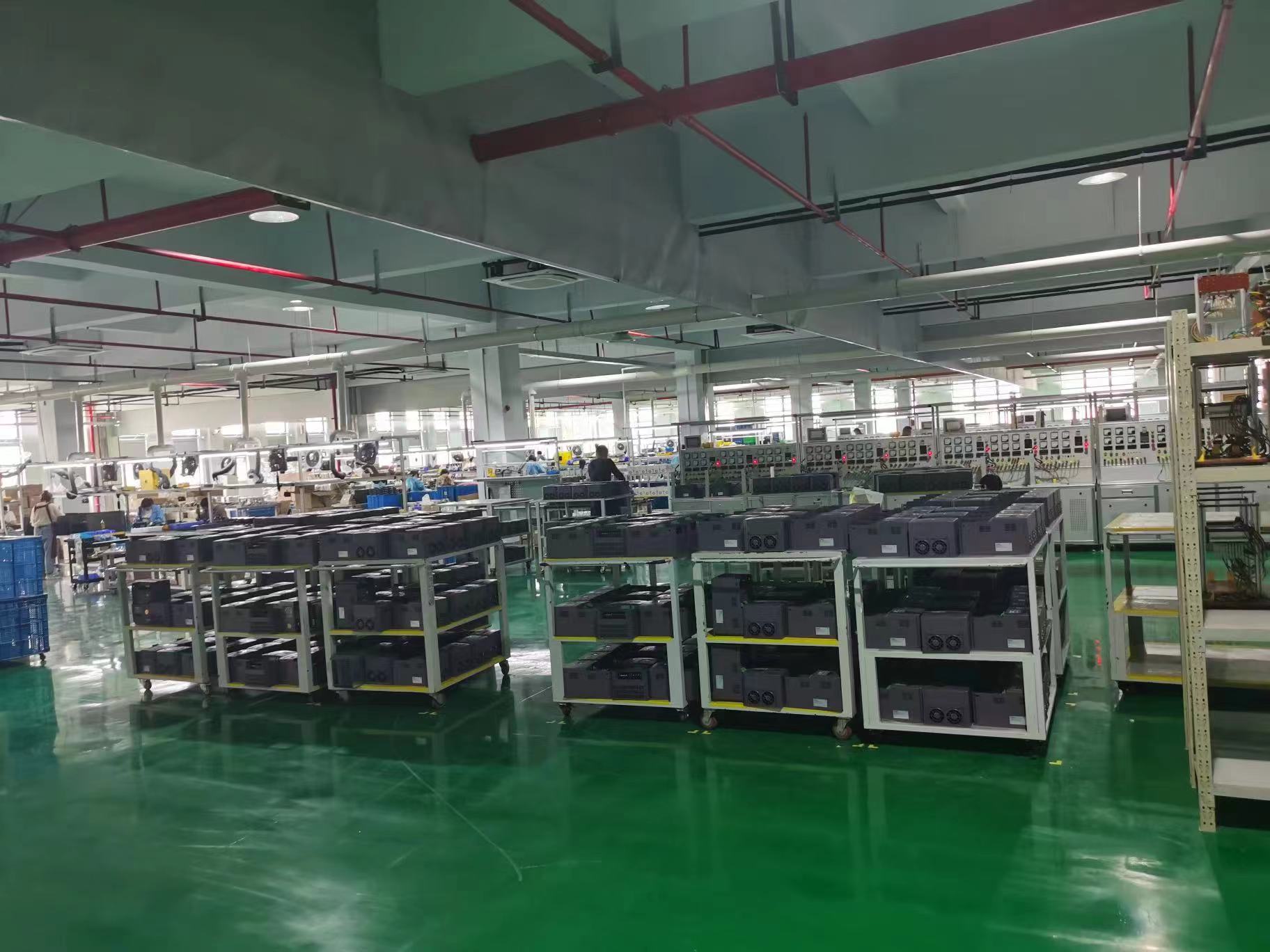
IFIND is an inverter manufacturer established in 2016 in Haiyan, Zhejiang. The company states that its facility covers approximately 15,000 square metres and employs more than 150 people, including a product engineering team.
Its manufacturing and service capabilities include:
In-house SMT production
Product engineering and application support
OEM and application-specific configuration
Remote technical assistance
Pre-shipment technical coordination
Service support through overseas agents
For reliable project matching, IFIND engineers can review the load list, PV array, utility input, battery specification and communication requirements before the order is confirmed.
Before Selecting Your Inverter
Prepare the following information for technical review:
Required continuous output power
Highest simultaneous load
Starting power of motors and compressors
AC output voltage and phase
Utility input voltage and frequency
Solar panel model and quantity
PV string open-circuit and operating voltage
Battery chemistry, voltage and capacity, if used
Required communication interface
Indoor installation temperature and ventilation
Need for nighttime or outage operation
Pump motor nameplate, when applicable
Providing this information helps determine whether the 3.6kW, 4.2kW or 6.2kW configuration is appropriate.
Hybrid Solar Inverter FAQs
What happens if sunlight suddenly drops during battery-free operation?
The result depends on the selected priority mode and whether utility power is available. The inverter may draw support from the grid, reduce the available output or stop supplying the load. A battery is recommended when short power interruptions are unacceptable.
Can I install the inverter now and add batteries later?
Yes, the system can initially be configured for battery-free daytime operation and later connected to a compatible battery bank. Battery voltage, chemistry, charging limits and communication requirements must be checked before expansion.
How should I calculate the PV string voltage?
Add the operating voltage of the modules connected in series to calculate the approximate working voltage. Also calculate the cold-weather open-circuit voltage. The complete string must remain within the specified MPPT range and below the maximum PV input voltage.
Can the inverter be mounted outdoors?
The listed enclosure rating is IP20, so it should be installed indoors or inside a suitable weather-protected electrical cabinet. Adequate clearance and ventilation are required to control operating temperature.
Does pure sine wave output mean that any pump can be connected?
No. Pure sine wave output improves compatibility, but the pump’s voltage, phase, running power and startup current must still match the inverter. Some pumps require a dedicated solar pump VFD or additional motor-control equipment.
Can multiple inverter units operate in parallel?
Parallel operation depends on the exact power version, hardware and firmware. Do not assume every SD400 configuration supports it. The parallel model, maximum unit quantity and required accessories should be confirmed before ordering.
What routine maintenance does the inverter require?
Keep the ventilation openings clean, check wiring and terminals periodically, watch for abnormal temperature or noise, and review fault records when available. Maintenance should be performed with the system isolated and according to the installation manual.
Does the inverter provide power at night without a battery?
Only if another approved source, such as the utility grid, is available and the system is configured to use it. Solar panels alone cannot provide nighttime power, so a battery is required for stored off-grid energy.
Need a 3-in-1 Hybrid Inverter Matched to Your System?
Send us your solar panel specifications, required AC output, battery plan, peak load, and pump motor data if applicable. Our team will review compatibility and prepare a practical system configuration and quotation.
VF and VECTOR VFD inverter are already widely used in the world, The software is powerful and has a variety of control methods. Built-in PID, simple PLC; The inverter has the advantages of good speed regulation performance, high efficiency, stable performance, high reliability, strong overload capacity, etc., widely used in weaving, chemical fiber, printing and dyeing, plastics, light industry, machinery, chemical, steel, paper and other industries application
Solar inverter are already widely used in the world, Series applies to transforming three phase 380V or Single phase 220V submersible deep well pump into solar water pump system. It works this way that direct current produced by solar module inputs into alternating current which drives all kinds of water pump, especially for submersible well pump. Agricultural irrigation is carried out by directly connecting solar panels to drive water pumps
Elevators are already widely used in buliding,both for Synchronous and asynchronous motors the control functions and operation comfortable is much more and more important, our elevator inverter suitables for passenger and cargos, use the PMW and V/F ,vector control. Adopt international advanced V/F and vector technology Programmable Open Collector Output, Relay Output, Analog Output, Programmable Digital Input, Ensure the smooth and safe operation of the elevator.
Hybrid inverter are already widely used in the world, MPPT Solar Hybrid Inverter is a new all-in-one hybrid solar charge inverter, which integrates solar energy storage &means charging energy storage and AC sine wave output.It can be accessed to a variety of household appliances and office loads, power tools, industrial equipment, and electronic audio and video equipment, including refrigerators, lamps, televisions, fans, air conditioning and other AC loads